

Water Team
Sweco UK
Why business-as-usual modelling no longer holds water
As regulation tightens, climate pressures intensify and infrastructure continues to age, the water sector is being forced to rethink how wastewater systems are planned, modelled and managed.
Here, Sweco UK’s Mandy Surradge and Geraldine Angus FICE reflect on how drainage modelling is moving beyond business as usual – and why the future of water will depend as much on people and mindset as it does on tools and technology.
Q: How is the water industry changing, and what does it mean for urban and sewer drainage modelling?
Mandy: The biggest immediate driver is regulation around CSO spills. As we move through AMP8 and subsequently into AMP9, reducing spills isn’t optional – it’s fundamental. That puts wastewater drainage modelling front and centre in decision‑making, because you can’t fix what you don’t properly understand.
Geraldine: And it’s not just about meeting today’s targets. Climate change, population growth and ageing infrastructure mean the systems we’re modelling are under more pressure than ever. The role of modelling is expanding – it’s no longer just a technical, business‑as‑usual exercise. It’s about thinking in the round to help shape long‑term, sustainable solutions for whole catchments.
Q: When you look ahead, what does the future of water demand from the way we model and manage wastewater systems?
Mandy: If we’re honest, the future is demanding that we do things differently. We can’t just keep defaulting to the same solutions and expect them to work under increasing pressure. Modelling has to help us properly understand systems, so we’re making decisions that stand up not just now, but in the long term.
Geraldine: The systems we’re modelling are only going to get more complex – climate change, growth, ageing assets, all of it is happening at once. The future of water depends on being able to step back, look at the whole catchment, and ask whether what we’re doing today is actually setting us up for what’s coming next.
Q: Is the type of modeller the industry needs today different from five or ten years ago?
Mandy: Absolutely. Modelling has become far more automated over the last decade, and in some places that’s led to people running models without really engineering the problem. At Sweco, we see that as a risk.
What we need are people who really understand the traditional fundamentals of modelling, but who are also open to new approaches – whether that’s smart systems, SuDS, or working closely with asset management and other disciplines to explore the bigger real‑world picture, beyond the digital simulation.
Geraldine: The modeller of the future has to be adaptable. Tools will keep changing, but the ability to think critically and ask, “Is this actually the right solution?” is what really matters.
Q: There’s a lot of talk about smart and nature‑based solutions. Can you expand on that?
Mandy: The reality is that, across the industry, we’re still often defaulting to ‘big grey boxes’ because they’re familiar, deliverable and tangible. But that won’t be enough going forward.
At Sweco, we’re extremely good at the smart stuff – integrating modelling with wider systems thinking, exploring alternatives, and challenging assumptions. What we want is more people who are excited by that direction, while still keeping a real passion for the craft of modelling itself, and who want to help make great things happen across the water industry.
Q: How do consultancies – and clients – need to evolve for this new world of water?
Geraldine: A change in mindset is a big part of why this conversation matters. A lot of very capable people feel stuck in a rut, doing the same type of modelling over and over again. There is a role for those people to do things differently – but they need the right environment to do that in.
Mandy: That’s right. Some organisations do pigeon‑hole modellers and don’t encourage them to step outside their comfort zone. At Sweco, we actively want people to look beyond their immediate task – to understand the wider ecosystem of a project, and the wider impact of their work.
Q: What qualities are you really looking for in wastewater drainage modellers?
Geraldine: Curiosity. If you’re not questioning why you’re doing something a certain way, you’re probably missing opportunities to do it better.
Mandy: Yes, curiosity is a big tick – alongside adaptability. The challenges facing the water industry aren’t static, so we need people who can evolve with them – technically, but also in how they work with clients and other disciplines.
It’s about being confident enough to challenge, but also skilled enough to bring clients with you on that journey.
Q: What does Sweco offer for those ambitious modellers?
Mandy: We don’t just want people to run models – although we place huge importance on doing that to the highest standards. We want modellers who think differently. People who understand the detail, but are also interested in the bigger picture.
Geraldine: Sweco creates space for that way of thinking. If you’re someone who wants more from modelling – more influence, more variety, more purpose – this is the kind of culture where you can really grow.
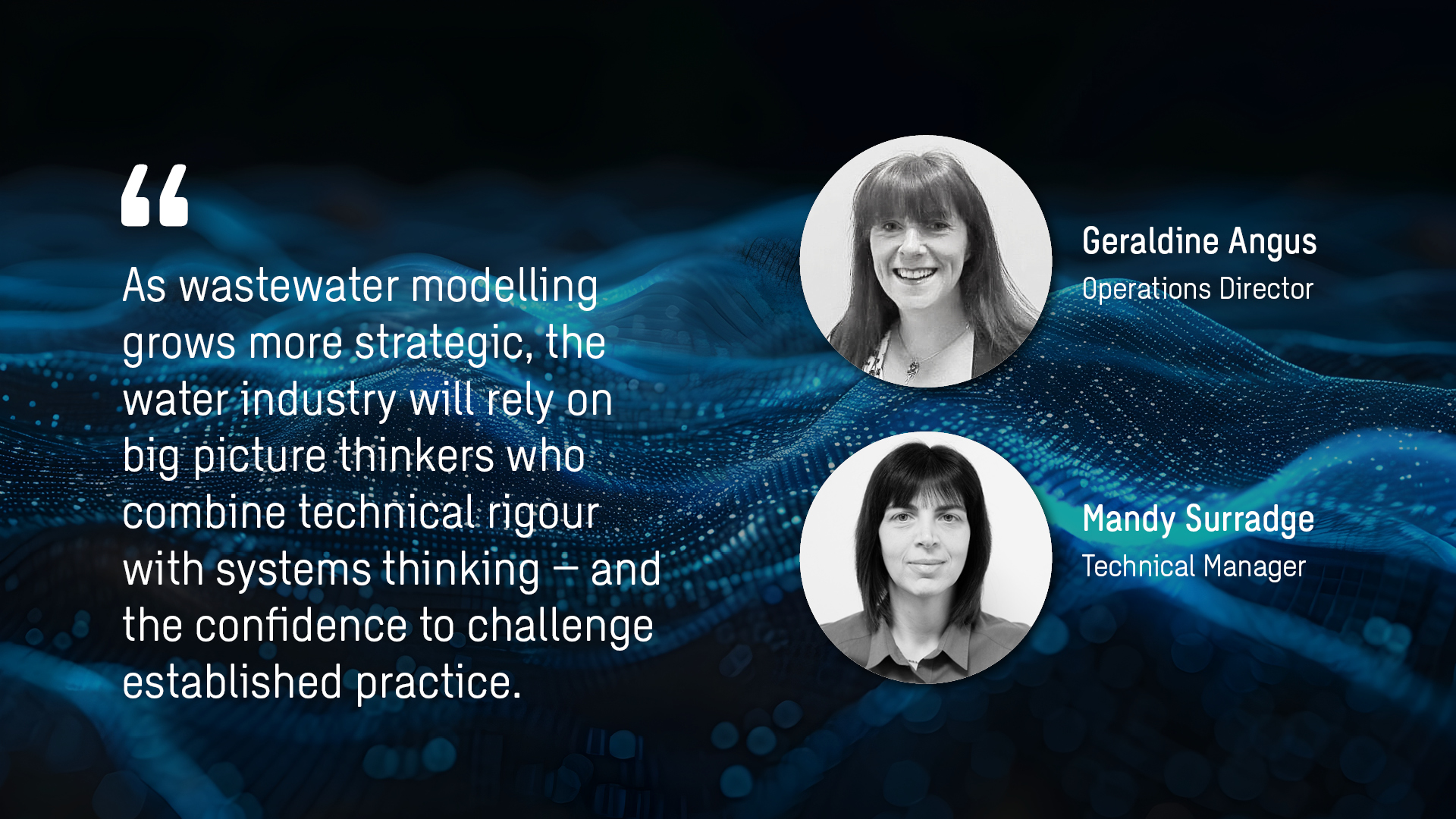
As modelling takes on a more strategic role, the industry will increasingly rely on modellers who can combine technical rigour with broader systems thinking, and who are prepared to challenge what has always been done in pursuit of better outcomes.