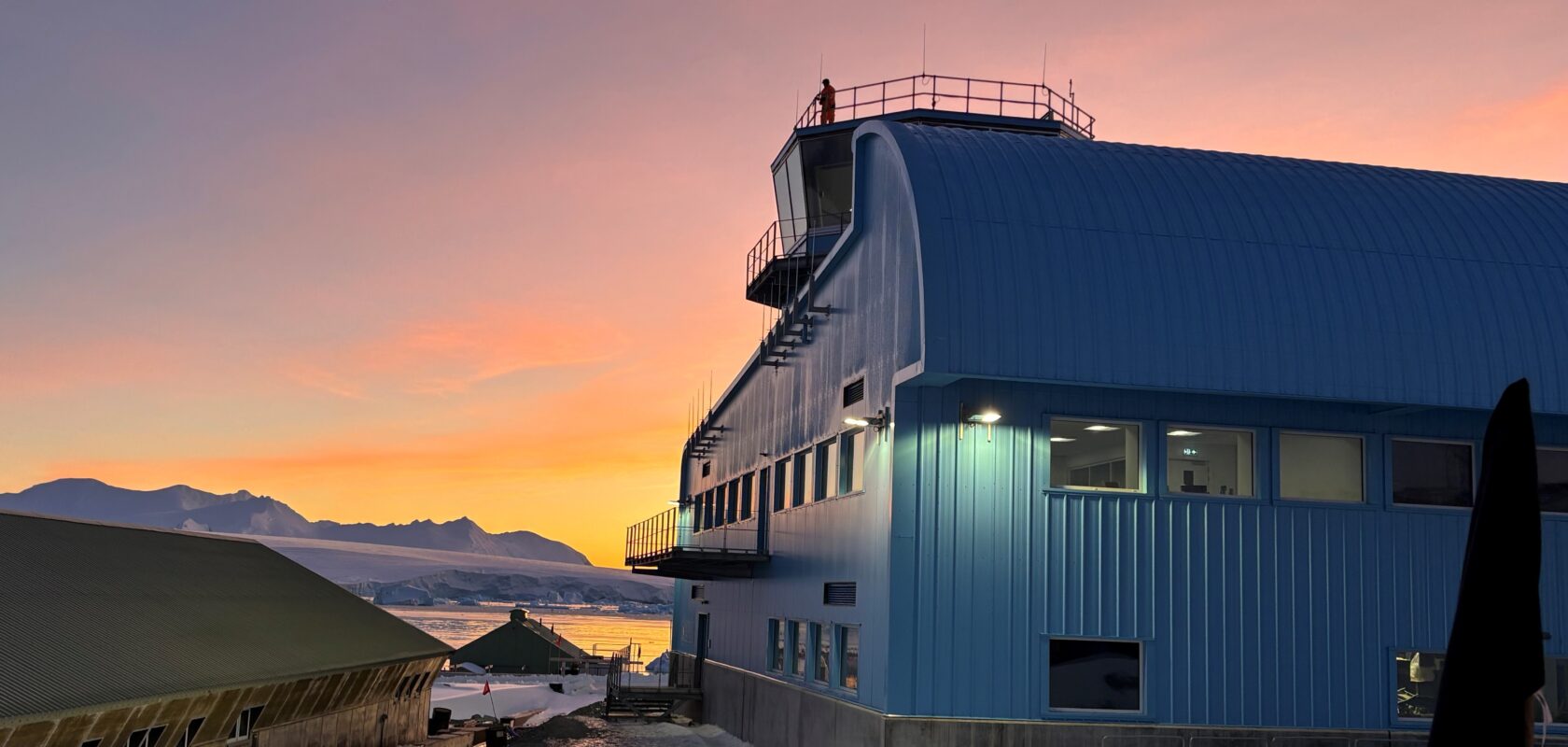
Rothera Discovery Building, Antarctica
Sweco is proud to have played a pivotal, multi‑disciplinary role in the delivery of the Discovery Building at Rothera Research Station, the new operational heart of the British Antarctic Survey’s (BAS) largest Antarctic research facility.
Officially opened in January 2026, the £100 million building marks a major milestone in the UK Government’s Antarctic Infrastructure Modernisation Programme (AIMP), consolidating science, operations and engineering functions – replacing multiple ‘legacy’ buildings within a single, highly resilient and sustainable facility.
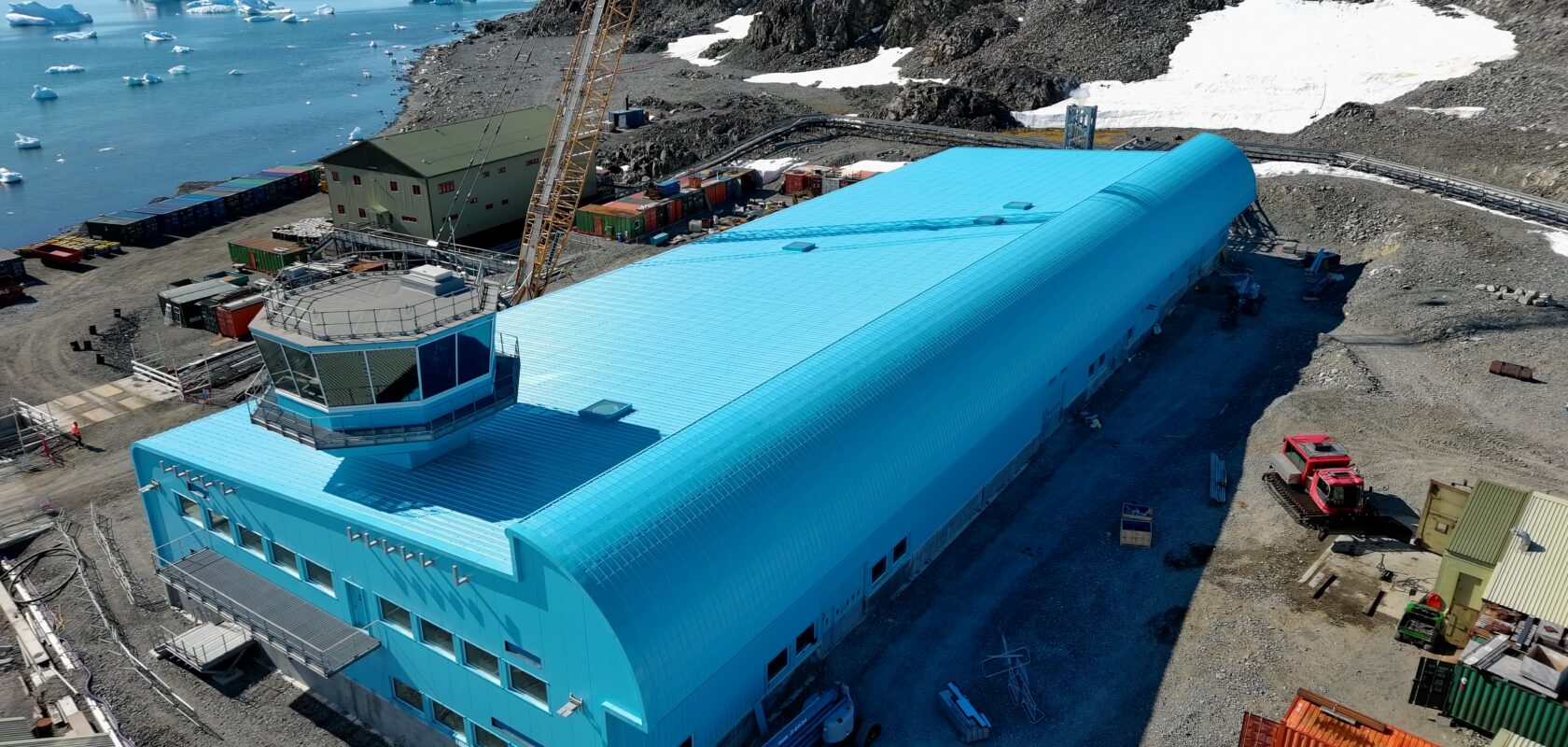
We are proud to work with our partners at British Antarctic Survey, BAM Nuttall, Ramboll, Hugh Broughton Architects, Norr Architecture and Turner & Townsend as we help to transform polar science through innovative engineering in one of the most remote parts of the planet.
Appointed as Lead Designer, Sweco was responsible for the structural, civil, mechanical and electrical design of the building, working in close collaboration with Hugh Broughton Architects (HBA) and a wider integrated delivery team. Specialist Sweco teams also delivered BMS, ICT, fire, acoustics, sustainability, carbon and BREEAM services, ensuring a fully coordinated and technically robust outcome in one of the world’s most extreme environments.
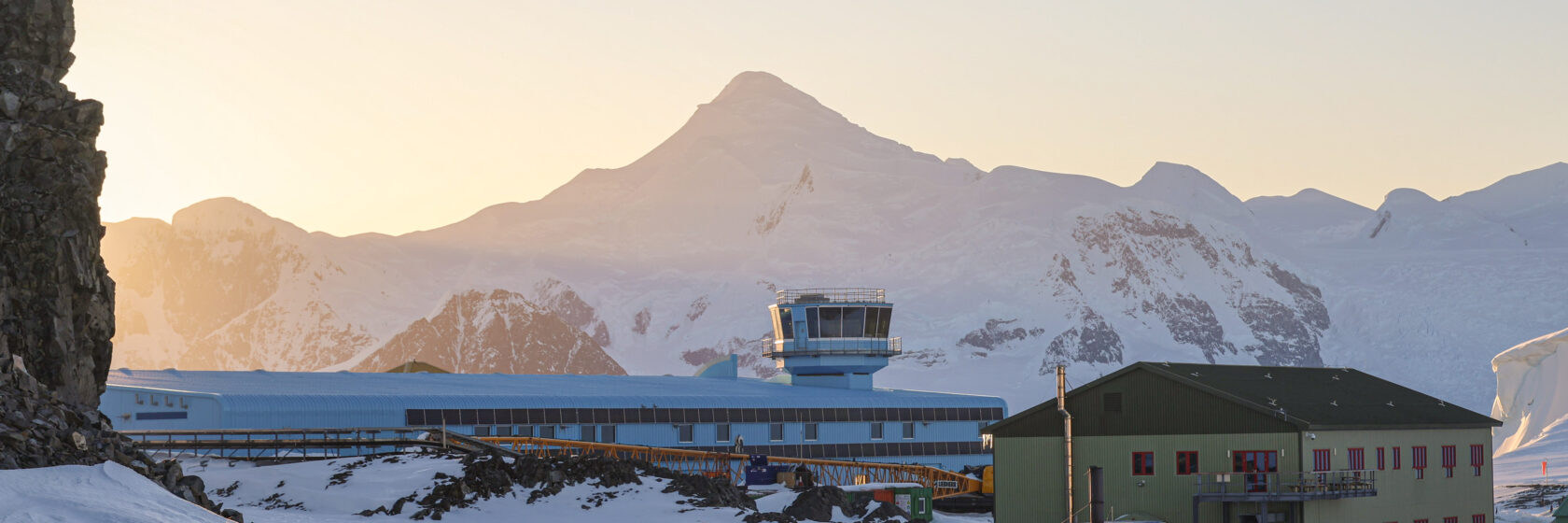
Supporting cohesive science delivery and operations
The Discovery Building fundamentally transforms how science and operations are delivered at Rothera. By consolidating power generation, water production, logistics, engineering, science support, operational planning, medical facilities and social spaces into a single purpose‑designed hub, the building replaces a number of ageing and inefficient structures that had reached the end of their operational life.
Internally, the building brings together field preparation areas, workshops, medical facilities, offices, recreational spaces, a central store and critical plant services, creating a cohesive and highly efficient working environment.
Vibrant colours, abundant natural light and open‑plan collaboration zones have been carefully integrated to support wellbeing, team cohesion and productivity during long Antarctic winters.
From the outset, Sweco played a pivotal role in interpreting and developing BAS user requirements, translating complex operational needs and extreme climatic conditions into bespoke, buildable engineering solutions that will benefit the station for decades. A fully coordinated BIM model underpinned the design, supporting a “build it before you build it” approach that enabled off‑site prefabrication, reduced time on site and improved certainty within Antarctica’s limited construction windows.
Improving station resilience
With temperatures reaching extremes of –40°C, resilience was a core design driver. Sweco led the design of the site’s Energy Centre and site‑wide services strategy, incorporating multiple layers of redundancy across all critical systems.
The Energy Centre houses four combined heat and power (CHP) engines arranged in a duty, duty, standby, spare configuration, ensuring continuous power and heat supply even during maintenance or equipment failure. This continuity‑focused philosophy extends to servers, UPS, freezers, boilers, fire pumps, potable water storage, reverse‑osmosis plant and ventilation systems serving critical spaces. Temporary generator connection points were also incorporated to protect essential functions in extreme scenarios.
As our friends at HBA reflect, architecturally, the building “sets a new benchmark for resilient polar design”, with its aerodynamic form and orientation developed to perform reliably in severe wind and snow conditions.
Futureproofing infrastructure
The Discovery Building has been designed to adapt over its full operational lifespan. Sweco’s team of teams ensured that the structural frame will provide stability without reliance on internal walls, allowing internal layouts to be reconfigured as scientific and operational requirements evolve.
Generous allowances were built into plant rooms, cable routes and server capacity, enabling future expansion without major intervention. Asset information was developed to a high level of detail and aligned directly with BAS’s facilities management systems, supporting proactive maintenance and long‑term operational certainty.
Achieving effective biosecurity
Protecting Antarctica’s pristine environment was a key responsibility. The Discovery Building incorporates dedicated biosecurity facilities that allow all incoming cargo to be fumigated and decontaminated on arrival.
Sweco worked closely with BAS environmental specialists to design airtight biosecurity rooms with specialist ventilation, purge systems, warning alarms and fire‑alarm isolation during fumigation. These facilities provide a robust, safe and practical solution to managing biosecurity risk at one of the world’s most remote research stations.
Sustainable infrastructure
Sustainability was embedded throughout the design, despite the challenges of the Antarctic climate. The building has been designed with the goal of achieving BREEAM Excellent, shaping decisions on fabric performance, ventilation strategies, material selection and long‑term resilience.
The Discovery Building is set to become NERC’s first BREEAM certified project in Antarctica, delivered against a bespoke BREEAM accreditation specific to Antarctic projects. Sweco also undertook operational and embodied carbon assessments in line with PAS 2080, enabling performance to be monitored through construction and into operation.
Water efficiency measures reduce consumption across sanitary fittings, taps and showers, while a high‑pressure water‑mist fire suppression system further minimises demand.
Reducing fuel consumption
A key objective for BAS was reducing overall fuel use at Rothera. By consolidating decentralised functions into a single facility, the Discovery Building with CHP engines designed to recover waste heat for space heating, significantly reducing reliance on boilers. These savings are further supported by a high‑performance building envelope, heat‑recovery ventilation and solar PV panels installed on the north façade.
Reducing the need for snow management
Our teams also developed innovative solutions to minimise snow accumulation and manual clearance. The building features a pioneering full‑building wind deflector, the first of its scale ever deployed in Antarctica, which accelerates airflow down the leeward side and dramatically reduces snow accumulation adjacent to the building.
In addition, Sweco designed low‑temperature hot‑water snow‑ and ice‑melting systems embedded within precast apron slabs at key entrances. These provide a controllable, low‑energy method of maintaining safe access and are now operating effectively on site.
Improving staff welfare and quality of life
The Discovery Building represents a step change in living and working conditions at Rothera. Ventilation rates, light levels, heating set points, daylight provision, user‑controlled blinds and climate controls were all designed around end‑user needs, supporting safe, comfortable and effective use of the building.
Internally, colourful interiors, recreational spaces, medical facilities and open‑plan offices significantly enhance quality of life for staff overwintering at the station. Transparent internal glazing also supports safe operation during winter months, when a small team maintains the station in near‑total darkness.
Wellbeing considerations extend beyond people to the surrounding environment. Measures include minimising external lighting around the buildings, as this is known to cause confusion to birds. Blinds have also been installed to all external windows to prevent light escaping from the building, which could also cause confusion to the birds.
The building has also been designed to be resilient to the marine life, including RC walls extending between 1-2 metres up from ground level, changing to the striking blue SIP cladding panels for the remaining external wall construction. This concrete ‘skirt’ around the lower half of the building will protect the building from snow clearing machinery, but also from the damage that would otherwise be caused by elephant seals or fur seals lying against the building. Noise surveys and continuous monitoring have been carried out during the construction period to ensure minimal disruption to the wildlife, and the people on station.
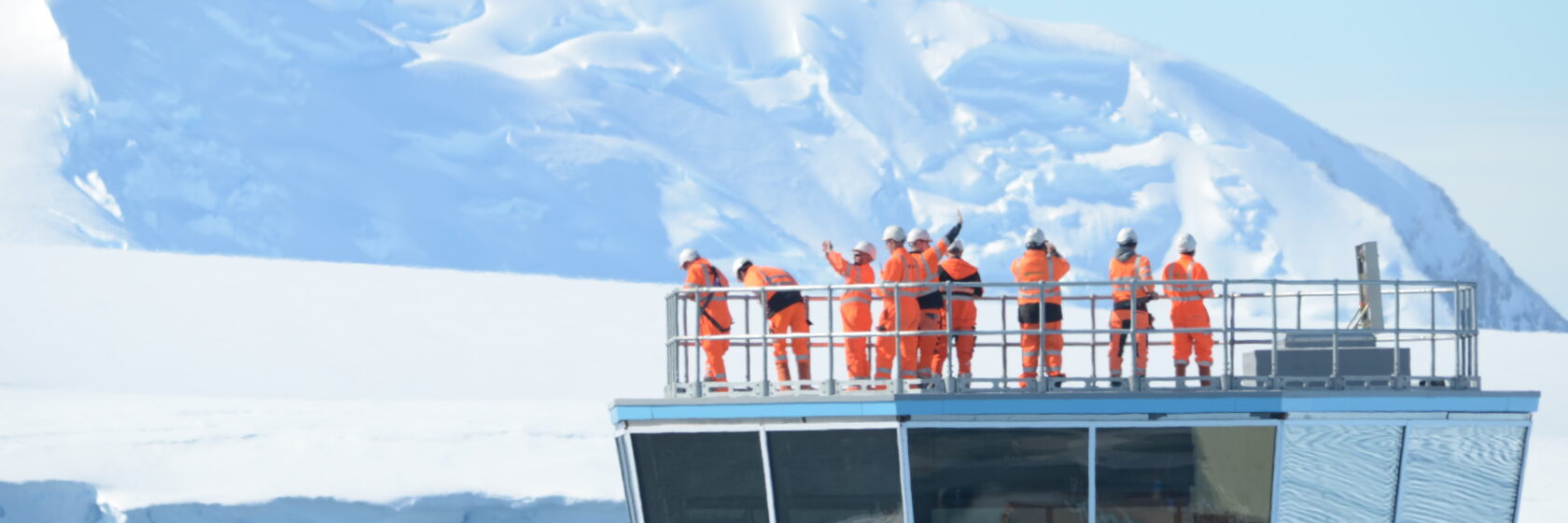
Delivered between 2018 and 2026, the Discovery Building was completed on time and to budget, despite the challenges of COVID‑19, remote technical delivery and extreme logistical constraints. The project reflects the collaboration, resilience and technical excellence of hundreds of Sweco specialists across the UK and Europe, working alongside BAS, Hugh Broughton Architects and the wider AIMP team.
As BAS marks 50 years of operations at Rothera, the Discovery Building – underpinned by Sweco’s technical leadership – provides a transformational operational hub, supporting the next generation of Antarctic science and global climate research.
Images with thanks to Eliot Perez, BAM, Matt Hughes, Ciara McDonald, BAS.
