
Newsdesk
Sweco UK
Sweco plays pivotal role in delivery of UK’s new Antarctic Discovery Building
January 2026: Antarctic Infrastructure Modernisation Programme reaches major milestone with opening of new research hub.
Sweco is proud to have played a leading, multi‑disciplinary role in the delivery of the Rothera Discovery Building, a new Antarctic research facility designed to consolidate polar science delivery while improving operational resilience, sustainability and quality of life for staff.
Forming the operational heart of the British Antarctic Survey’s (BAS) largest Antarctic research station, the £100 million Discovery Building consolidates power generation, water production, logistics, engineering, science support and operational planning within a single purpose‑designed facility. The building has now been completed, on time and to budget, as part of the UK Government’s Antarctic Infrastructure Modernisation Programme (AIMP).
Sweco was appointed as Lead Designer for the Discovery Building, responsible for delivering the technical design for the structural, civil, mechanical and electrical building services. Working closely with Hugh Broughton Architects, Sweco also supported delivery of the architectural design, with specialist input from Sweco BMS, ICT, fire, acoustics, sustainability, carbon and BREEAM consultants, ensuring a fully integrated and coordinated approach.
A new architectural landmark for Antarctica
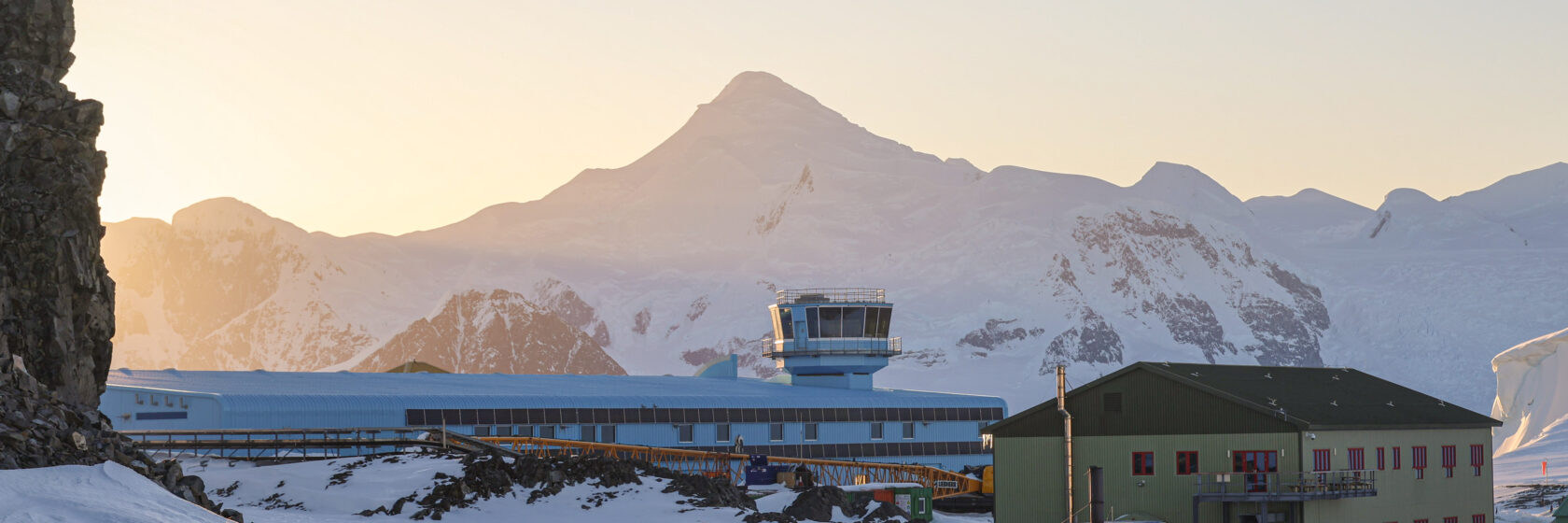
The two-storey, 4,500 sqm Discovery Building is located within Rothera Research Station on Adelaide Island on the Antarctic Peninsula, the UK’s largest research facility in Antarctica. The building sets a new benchmark for resilient polar design. Its aerodynamic form, carefully oriented to the prevailing wind, features a pioneering full-building wind deflector, the first of its scale ever deployed in Antarctica. This innovation accelerates airflow down the leeward side of the building, dramatically reducing snow accumulation adjacent to the building and improving long-term operational efficiency.
The building’s pale blue envelope, inspired by the tones of the Antarctic sky, is crafted from highly insulated composite panels and triple glazing to deliver exceptional airtightness and energy performance. A panoramic control tower rises above the monopitch roof, offering uninterrupted 360-degree views across the runway, wharf and station.
Internally, the Discovery Building brings together field preparation areas, workshops, medical facilities, offices, recreational spaces, a central store and critical plant services. Vibrant colours, abundant natural light and open-plan collaboration zones are designed to enhance wellbeing, support team cohesion and mitigate the effects of long polar winters.
Robust, proven technologies ensure reliability in the harsh Antarctic climate, while transparent internal glazing supports safe operation during the winter months when a small team maintains the station. Power is provided by efficient Combined Heat and Power generators. Discovery Building has water efficiency measures put in place that result in lower water consumption for sanitary fittings, taps, and showers. Usage is also reduced through the installation of a high-pressure water mist fire suppression system.
From the outset, our team played a pivotal role in interpreting, developing and enhancing user requirements to deliver a technical design that will benefit BAS for many years to come, translating complex operational needs and extreme Antarctic conditions into robust, buildable and bespoke engineering solutions.
As a result, the Discovery Building incorporates several bespoke, continuity-focused technical innovations developed by Sweco to improve safety, resilience and long‑term operability. Sweco developed the design for a wind deflector to scour snow away from the south side of the building, reducing the need for mechanical snow clearing.
In addition, we designed a snow and ice melting system for the aprons to the large entrances on the north elevation, providing a controllable, low‑energy solution for keeping key access points clear. Both systems are now installed and operating effectively, reducing operational burden in one of the world’s harshest environments.
I’m most proud of the tireless collaboration that made this project happen, even with remote working forced on us by COVID and by the remoteness of the site in Rothera. Every member of the partnership has been responsible for the collaboration throughout the duration of the project, weathering the challenges but still emerging with successful outcomes.
I am also very proud of the resilience of the individuals in Sweco to maintain focus on the high quality and technical accuracy of the work we have delivered.
Sarah Capperauld, Sweco Framework Design Manager for AIMP
In such unique and challenging conditions, with temperatures reaching extremes of ‑40°C, station resilience was a core design driver. Sweco led the design of a highly resilient Energy Centre and site‑wide services strategy, incorporating multiple layers of redundancy for all critical systems. This ensures continuous operation of power, water, heating, communications and scientific support functions, even in extreme conditions or during maintenance activities.
Digital delivery was fundamental to project success, with the team adopting a “build it before you build it” approach using 3D Building Information Modelling (BIM) to ensure fully coordinated and clash‑free designs. This enabled extensive off‑site prefabrication, reduced time on site and improved certainty during construction within Antarctica’s limited build windows – with each ‘active’ season limited to six months, until the building became water- and weather-tight.
In terms of sustainability, the building has been designed to a very high environmental standard, with a target to achieve BREEAM Excellent. This has shaped design decisions, material selection, construction waste management and the long‑term resilience and wellbeing of the working environment.
The consolidation of functions into a single, purpose‑designed facility has significantly reduced overall fuel consumption compared to the station’s older buildings. It has been calculated that the station should expect to realise a 24% (+/‑ 5%) reduction in fuel consumption compared to the 2015 baseline year.
The design of all systems, services and building layouts was developed around end‑user needs, supporting the safe, comfortable and effective use of the building. Ventilation rates, light levels, heating set points, daylight provision, user‑controlled blinds and climate controls, along with colourful interiors, recreational spaces, medical facilities and open‑plan offices, all contribute to staff wellbeing on station.
Wellbeing at Rothera extends beyond the human community to the surrounding natural environment. Measures were also incorporated to minimise risk and disturbance to bird and marine life around the station.
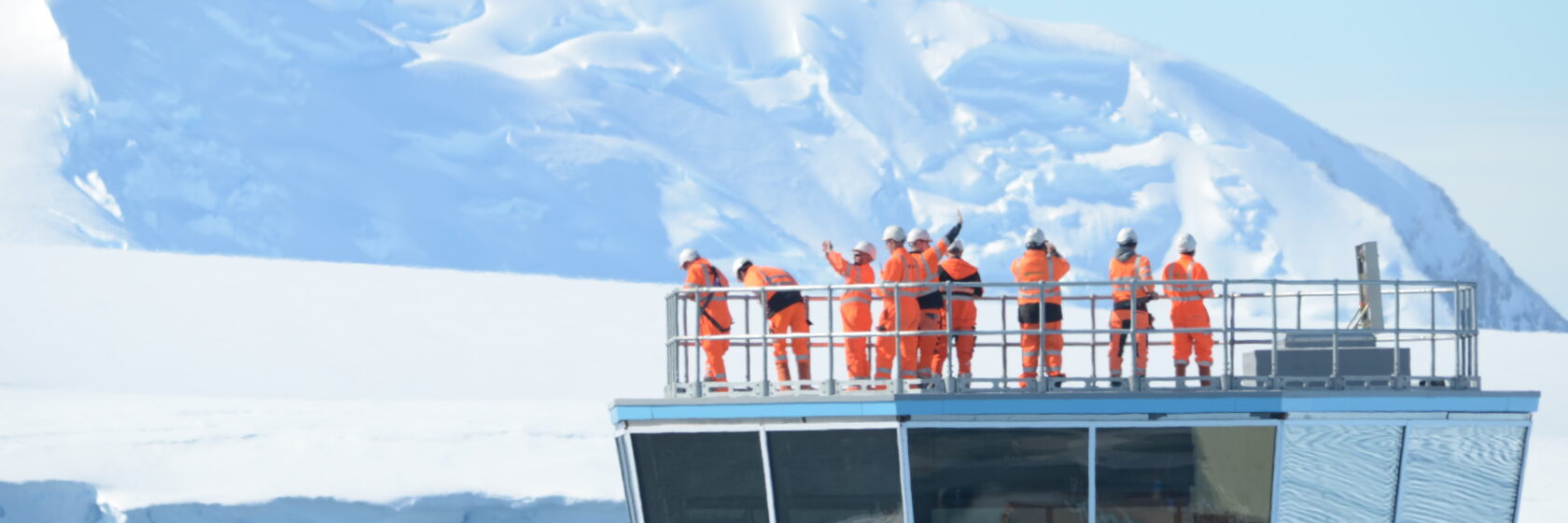
The project was delivered over several years and through significant challenges, including COVID‑19 and fully remote technical delivery. The Discovery Building reflects the agility, collaboration and technical excellence of hundreds of Sweco specialists across the UK and Europe, working alongside partners in the Antarctic Infrastructure Modernisation Programme (AIMP) between 2018 and 2026.
As BAS celebrates 50 years of operations at Rothera, the Discovery Building – underpinned by Sweco’s technical leadership – provides a safer, more efficient and lower‑carbon operational hub. It will support the next generation of Antarctic science, enabling research that improves understanding of global climate systems and their impacts worldwide.
