
Libby Barratt
Graduate Landscape Architect
The Quiet Role of Landscape Architecture in Mental Wellbeing
This article is based on Libby’s dissertation research into therapeutic landscapes and the impact of outdoor spaces and landscape design interventions on mental wellbeing, for her paper: ‘Enhancing The Quality of Life through Nature’s Healing Touch’.
Mental health support does not always begin with a conversation; sometimes, it starts with stepping outside. As awareness of mental health continues to grow, one of the most powerful tools for wellbeing is often hidden in plain sight, the green spaces and public environments around us.
From parks and streetscapes to shared courtyards and civic spaces, landscape architects quietly shape environments that can reduce stress, support emotional wellbeing, and improve mood in everyday life.
With lots of focus on stress and mental health during the spring months, it is a timely opportunity to reflect on how thoughtfully designed outdoor spaces can positively influence how we feel, everywhere, every day. Here we explore six ways in which well-designed public spaces, parks, and green infrastructure can foster positive mental health and wellbeing:
1. Reduces Stress and Calms the Nervous System
Exposure to nature has been shown to reduce stress, helping to lower cortisol levels, calm the nervous system, reduce blood pressure, and improve mood. Roger Ulrich’s Stress Recovery Theoryhighlights the psychological benefits of regular contact with natural environments and shows that extended periods away from nature can increase vulnerability to stress and mental fatigue.
This underlines the importance of embedding nature at multiple scales, from citywide green networks to neighbourhood parks and planted streets, so that restorative experiences are part of everyday life. Even a short walk through a park or green public space during a lunch break can create a sense of calm, offering a moment to pause, reset, and recover.
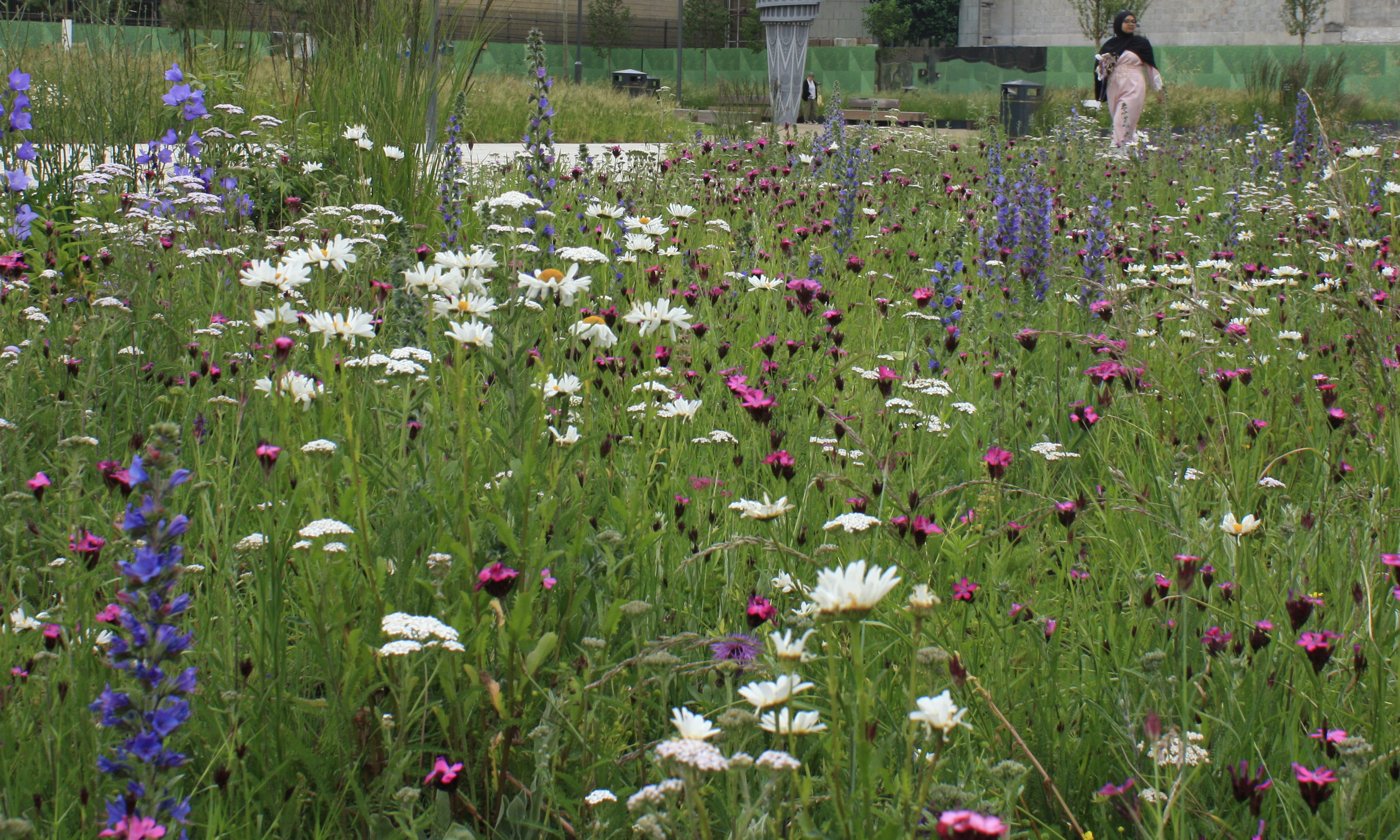 Sensory-rich public landscapes at Bradford by Sweco in collaboration with Bradford City Council.
Sensory-rich public landscapes help ground people in the present moment. Seasonal colour, texture, scent, and natural sounds, such as rustling grasses within planting schemes or the presence of moving water in the public realm can gently distract the mind from stress and support emotional regulation.
Green spaces can offer calm, sheltered places away from noise, pressure, and crowds. Open green spaces, seating surrounded by planting, water features, and sensory planting all create opportunities for mindfulness, reflection, and emotional regulation. Clear sightlines, good lighting, step-free routes, and ongoing management and maintenance are essential to ensure these spaces feel safe, inclusive, and welcoming to use throughout the day.
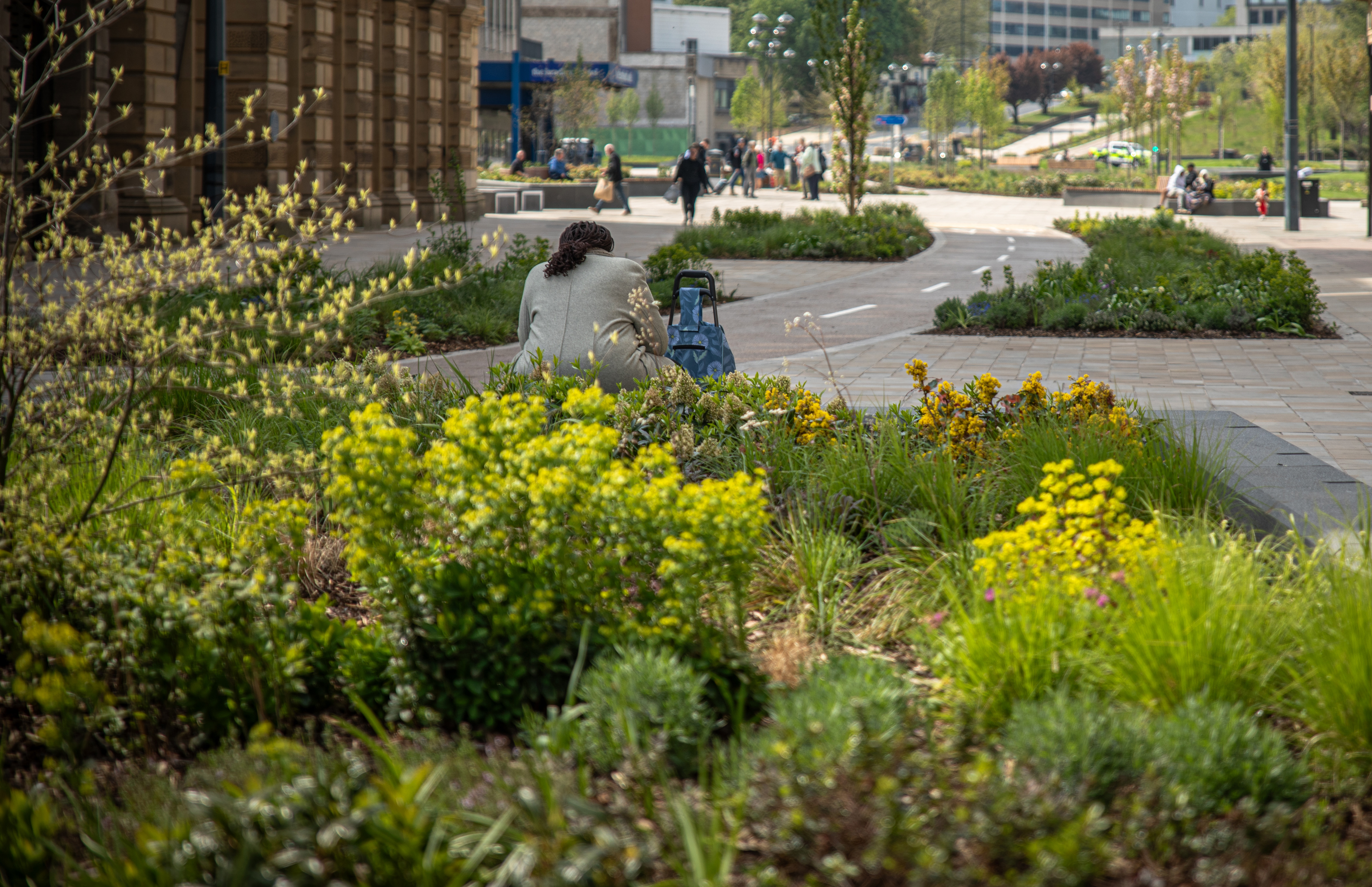 Bringing nature into the city in Bradford, public realm designed by Sweco in collaboration with Bradford City Council.
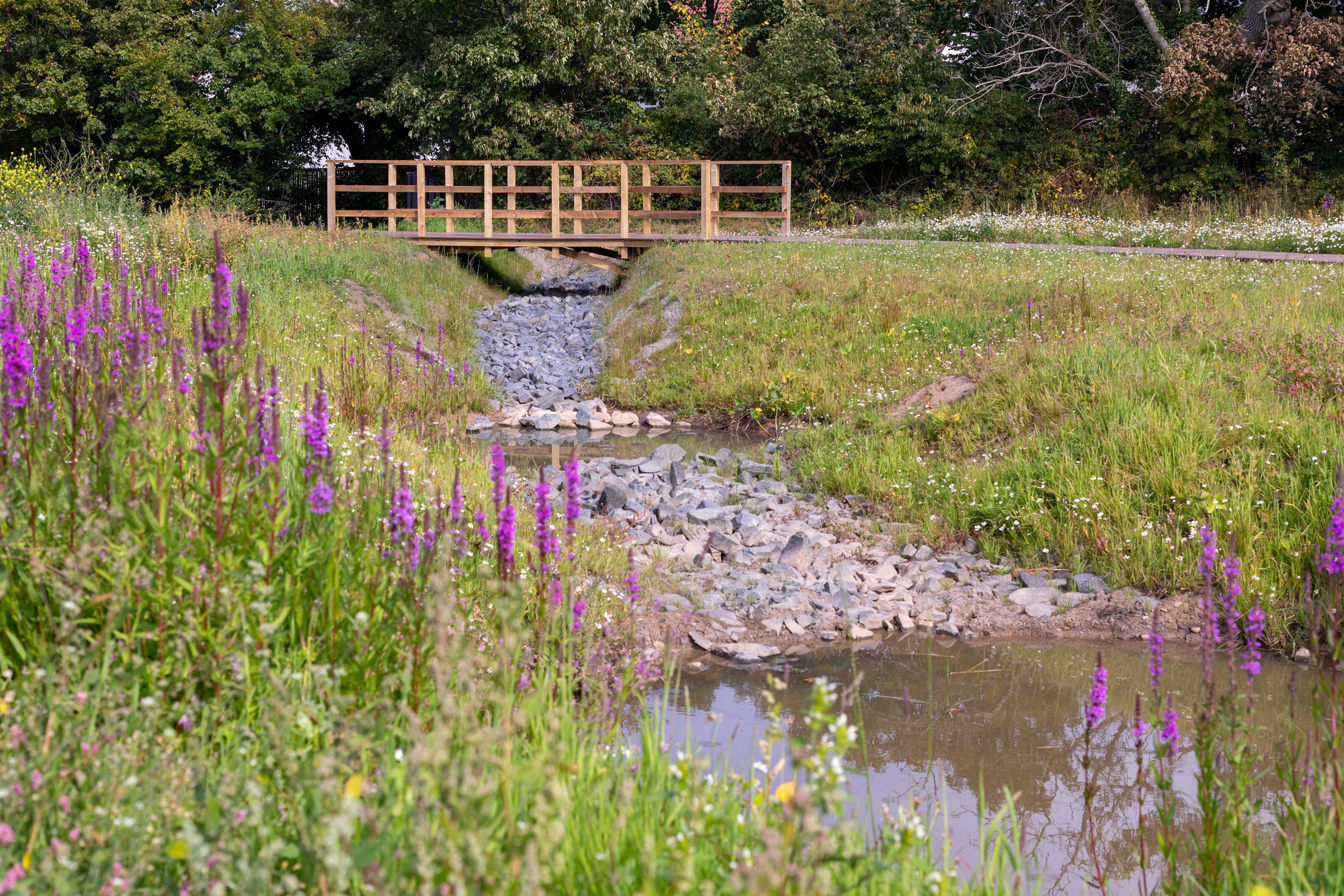 At Doonfoot Sensory Garden, Sweco’s design invites interaction with water alongside richly seasonal sensory planting
2. Supports Recovery and Therapeutic Outcomes
Landscape design can play a significant role in therapeutic environments. Research shows that access to green space can support recovery and improve wellbeing in healthcare settings.
In our work with Fife Council, Sweco landscape architects have explored how outdoor environments within care settings can actively support mental health and wellbeing. Across a series of care home projects, principles of therapeutic and dementia‑inclusive design were embedded into the landscape from the outset.
Circular wander paths were introduced to encourage gentle movement, reduce anxiety, and provide reassurance through continuity and legibility. Careful attention was given to colour, contrast and sensory stimulation within the paving and planting design, creating spaces that are both engaging and comfortable for residents with cognitive impairment. Seating was thoughtfully integrated to support elderly users and those with limited mobility, enabling rest, pause and social interaction.
A key consideration was designing landscapes that could evolve through use. By allowing space for personalisation, residents and staff were able to adapt the environment with planters, planting choices and garden ornamentation over time. This sense of ownership within a long‑term care setting is particularly powerful, fostering connection, dignity and identity, and in turn enhancing the therapeutic value of the landscape.
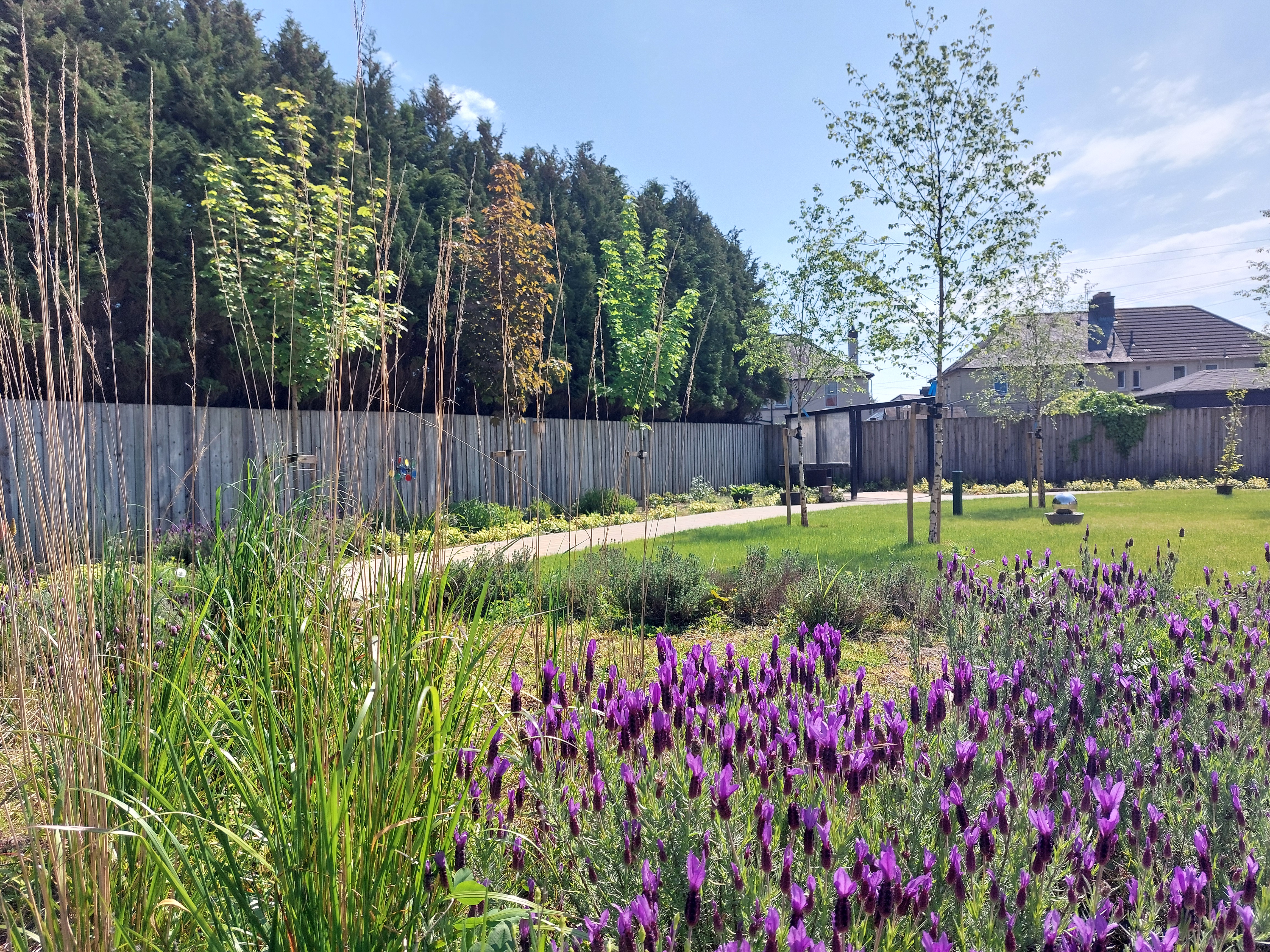 Sweco’s design for Fife Council’s care home creates a rich sensory landscape, with inviting paths and opportunities for resident personalisation.
3. Encourages Movement for mental wellbeing
Parks, green corridors, and walking and cycling routes encourage everyday movement, from walking and running to cycling and spending more time outdoors. Physical activity is closely linked to improved mental health, helping to reduce stress, improve mood, and support overall wellbeing, particularly when it takes place in natural environments. The World Health Organisation recognises urban green spaces as important settings for supporting physical, mental and spiritual health through activity.
Well-designed spaces encourage movement through a combination of play, exercise, and sport. Playful design along routes, often described as play on the way, supports spontaneous activity for all ages, while parks and open spaces provide opportunities for informal exercise alongside more structured facilities such as sports pitches and courts.
Design interventions such as continuous routes, step-free access, circular loops, cycle connections, and regular resting points help make physical activity inclusive, accessible, and embedded in the everyday environment.
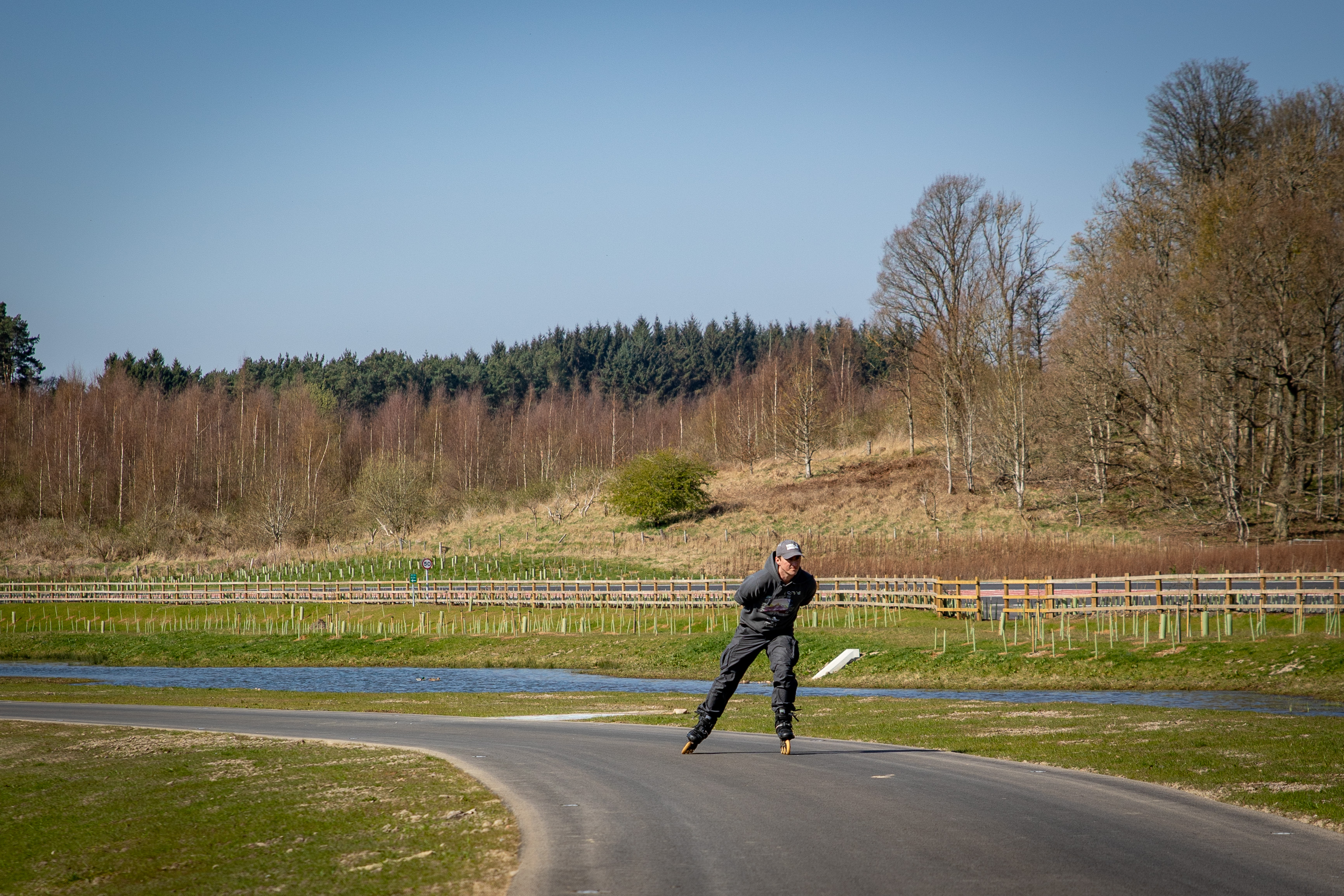 Supporting active travel along the Cross Tay Link Road through a design by Sweco
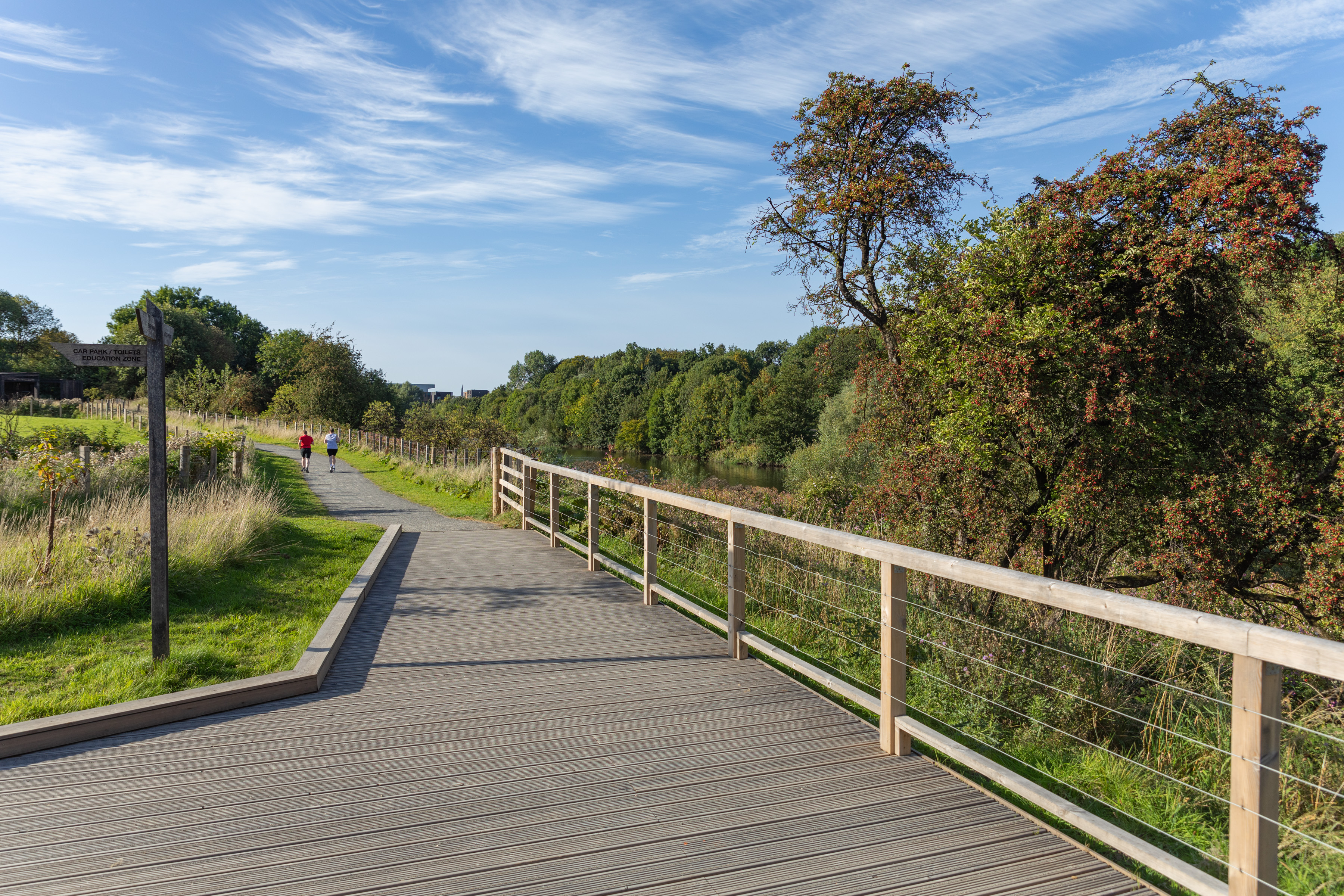 Creating opportunities for exercise in nature along the path and boardwalk network at Cunningar Loop, designed by Sweco
4. Restores Focus and Reduces Mental Fatigue
Natural environments are particularly effective at restoring attention and concentration. According to Rachel and Stephen Kaplan’s Attention Restoration Theory, time spent in nature helps replenish mental energy after prolonged periods of focus, such as working at a desk or managing complex tasks.
Even brief exposure to green space can support this recovery. The theory suggests that nature restores attention through soft fascination and gentle, effortless sensory experiences that allow the brain to rest without becoming bored or overstimulated.
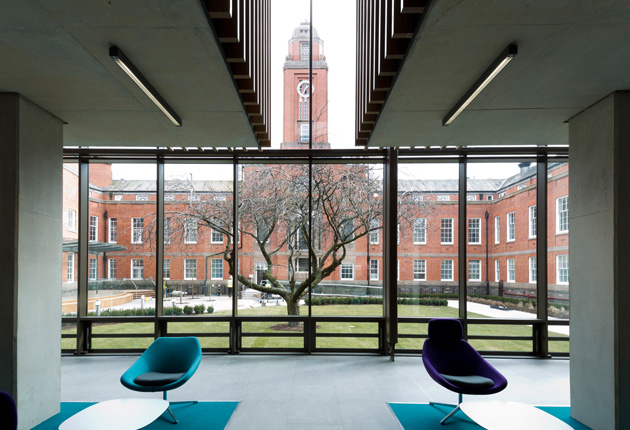 Bringing the outside in at Trafford Town Hall, shaped by landscape architecture from Sweco and architecture by 5 Plus Architects.
5. Creates Spaces for Social Connection
Public parks, squares, and shared outdoor environments provide opportunities for social interaction, helping to reduce loneliness and strengthen community ties. Well-designed public spaces encourage casual conversations, group activities, and a sense of belonging that supports emotional wellbeing. Inclusive layouts, accessible entrances, and well-managed spaces help ensure that people of all ages and abilities feel comfortable spending time together outdoors.
Spaces for social interaction range in scale, from large public squares where seating and playful features encourage social interaction to smaller community gardens and shared green spaces. These environments invite people to care for their surroundings and work together towards a common goal, supporting individual wellbeing.
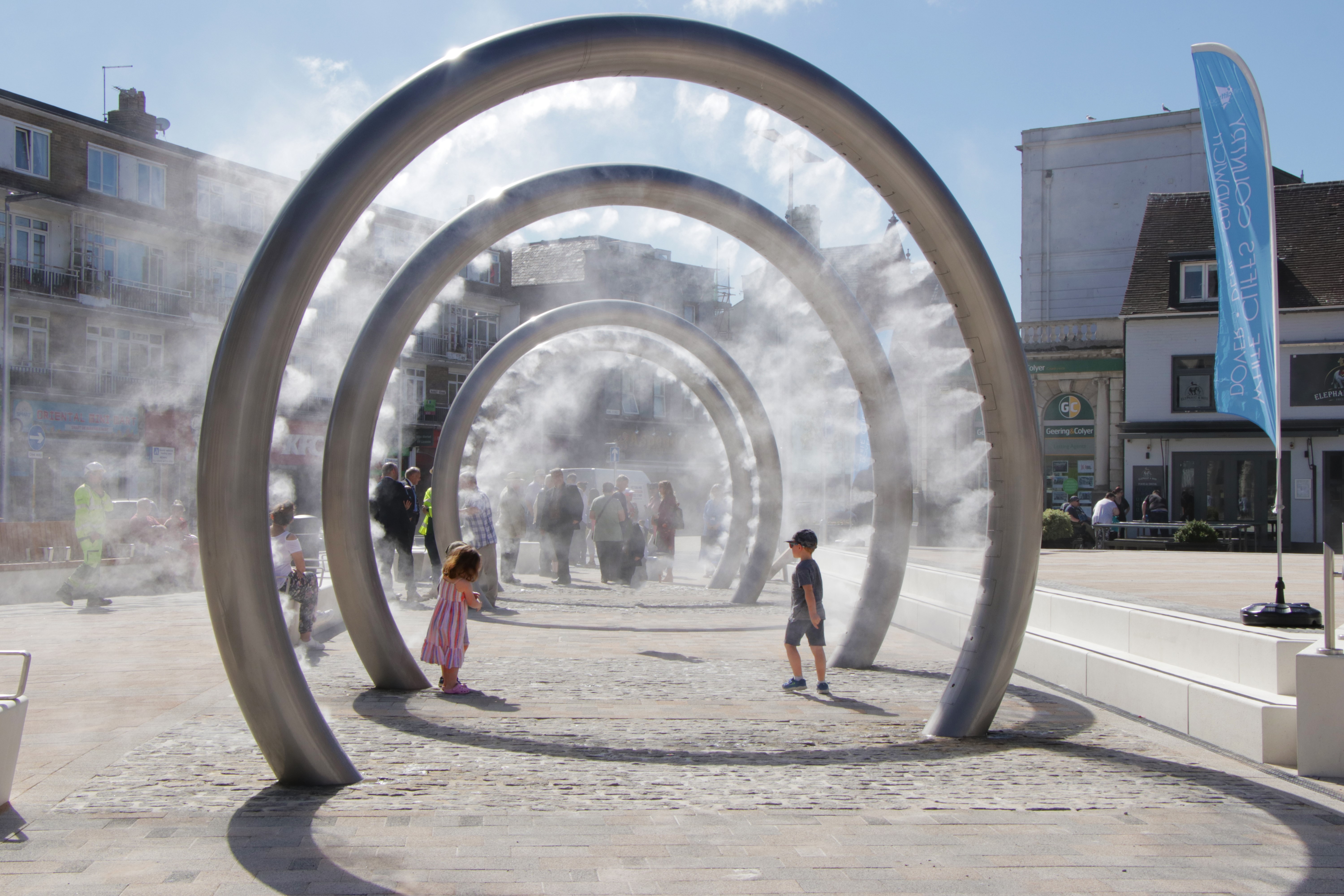 Designed by Sweco, Market Square in Dover fosters playful social interaction and everyday encounters
6. Fosters Identity, Belonging, and Pride
Thoughtful public realm design can help create a strong sense of place. When parks, streets, and shared outdoor spaces reflect local culture, character, and memory, they strengthen people’s emotional connection to the environments they use daily and support a feeling of belonging.
Design approaches such as co-design with local communities, the use of local materials, the retention of mature trees, native and climate-appropriate planting, and the integration of public art can all help a place feel rooted, recognisable, and cared for. These elements signal continuity and identity, reinforcing the relationship between people and their surroundings
When people feel that a place reflects who they are and how they live, it can foster pride and support social wellbeing. Long-term management and maintenance play a key role in sustaining this relationship, ensuring that spaces remain safe, well cared for, and valued over time. Spaces that are familiar, meaningful, and well-loved become shared reference points within communities, strengthening everyday connections and helping places feel welcoming, resilient, and enduring.
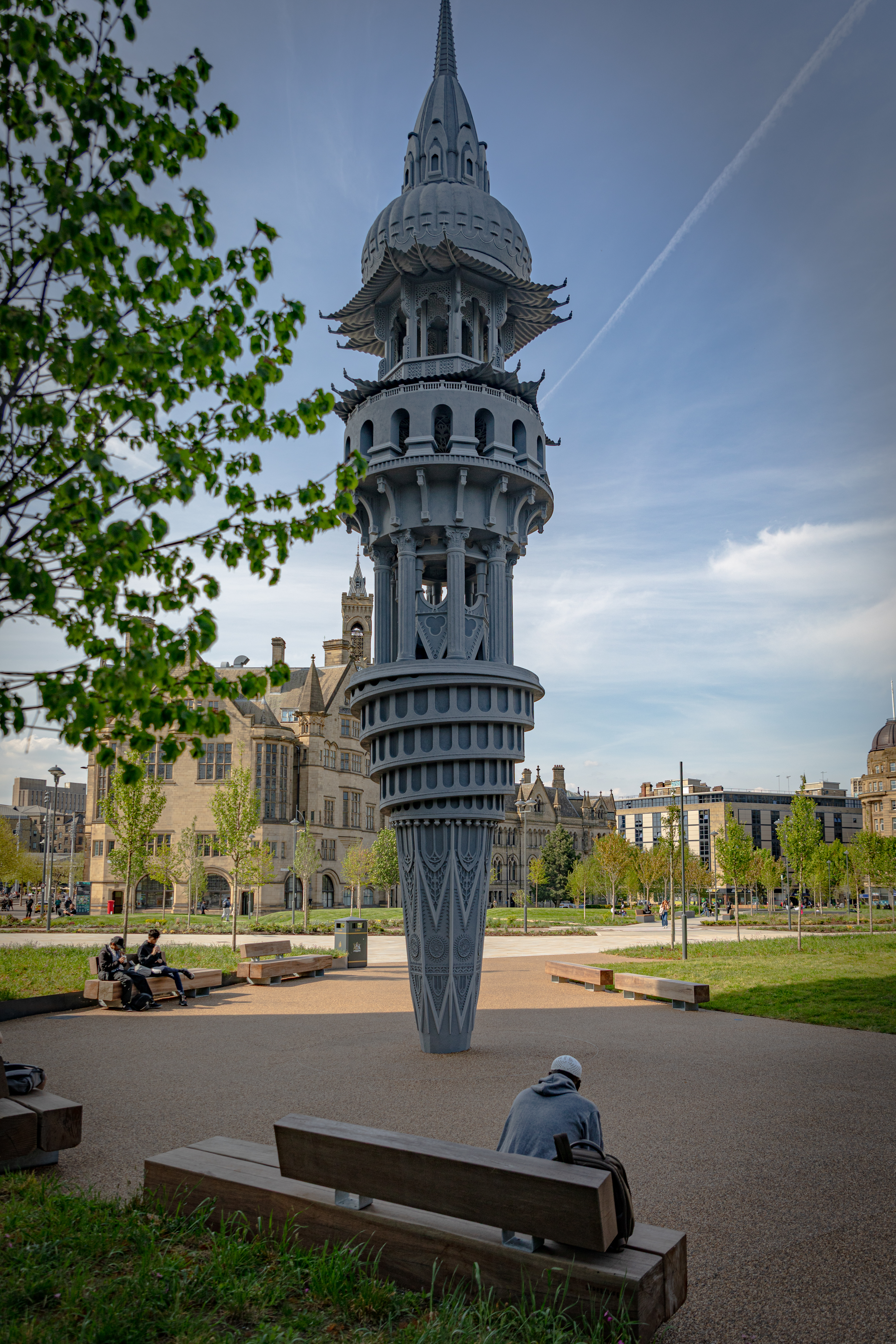 A reflection of Bradford’s civic pride and heritage, featuring a landscape by Sweco with Bradford City Council and the Tower of Now by Saad Qureshi
Designing Everyday Places That Support How We Feel
To conclude, the design of external environments is not just about aesthetics; it is about shaping public spaces and green infrastructure that support how people feel, function, and connect. By prioritising nature in everyday parks, streets, workplaces, and neighbourhoods, landscape architects help to create healthier and more supportive environments that benefit individuals, workplaces, and communities alike.
This Mental Health Awareness Month, it is worth remembering that supporting mental health does not have to be complex. Sometimes, it is as simple as stepping outside. Taking time in a thoughtfully designed green space, noticing how the body and mind respond, and allowing space to pause can make a meaningful difference, even in everyday moments.