
Jai-Ram Mistry
Sweco Innovation Analyst within Anglian Water’s @OneAlliance
The growing potential of mycofiltration in the water industry
Some of the most promising responses to today’s water challenges may not begin with a new chemical, tank or piece of mechanical equipment. They may instead begin with understanding how nature already solves problems we face.
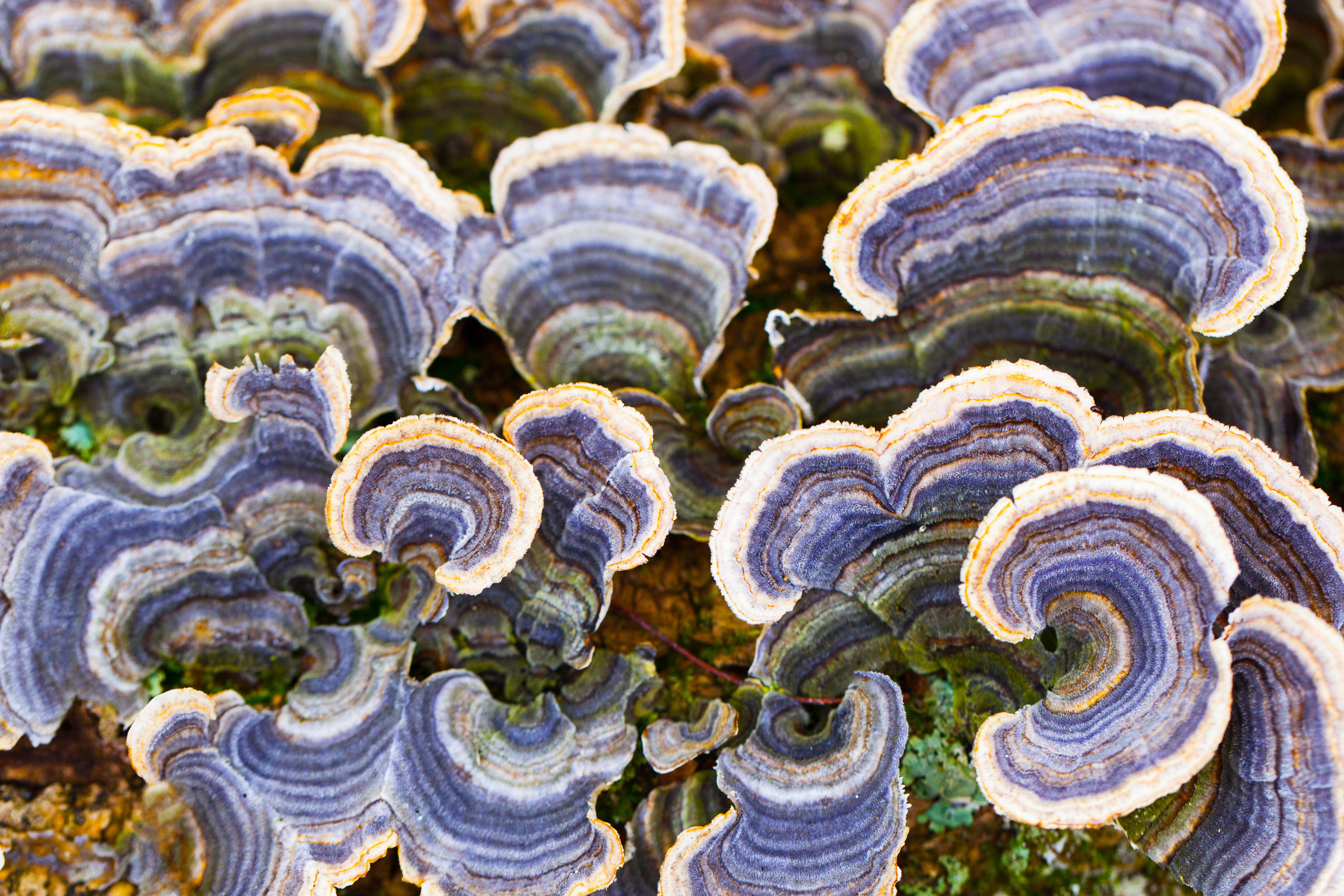
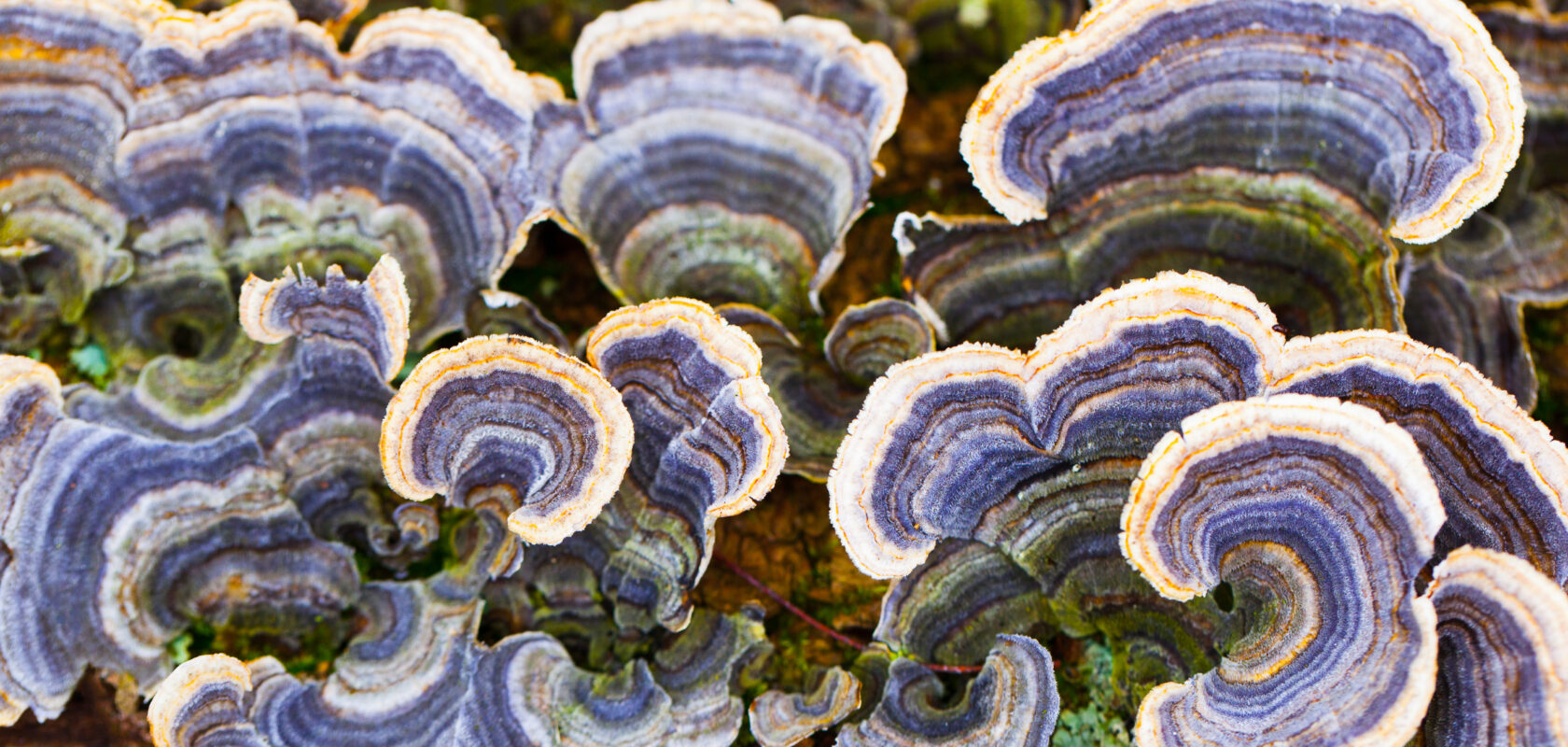
Fungi are a good example. Beneath the mushroom we see above ground is a complex network of fine, thread-like structures known as mycelium. This living network grows through soil, wood and other organic materials, interacting with its surroundings and supporting natural processes such as decomposition and nutrient cycling. That makes mycelium an intriguing material to explore in water treatment.
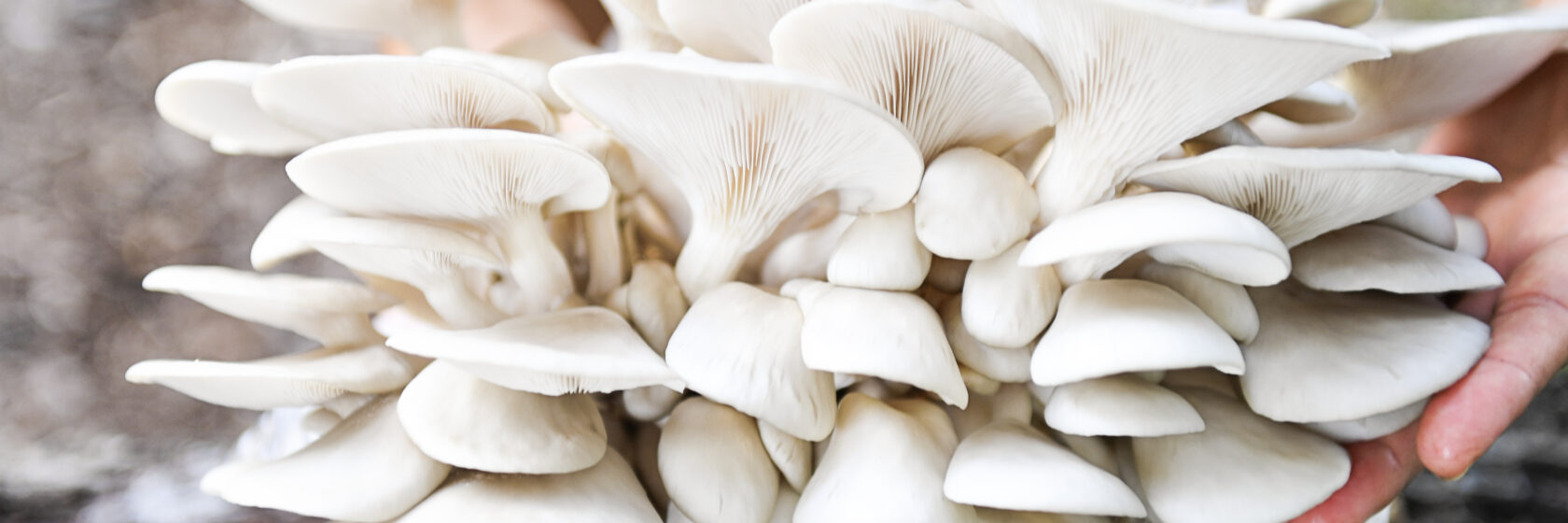
Mycofiltration – a specific form of biofiltration – uses fungal mycelium to filter or help break down pollutants in water. The concept is relatively simple: allow mycelium to grow through a natural substrate, such as sawdust, and use the resulting material to intercept contaminants as water passes through.
Right now, we’re proud to be exploring the growing potential of mycofiltration technology, using fungal mycelium to clean up river water and manage storm overflows, as part of an OFWAT-funded trial. The project is led by Anglian Water, in partnership with Spore & Anvil, Flete Field Lab, Barhale, University of Essex, Imperial College London, South East Water, Spring Innovation and others.
This project presents a unique opportunity to further explore the potential of using mycelium to improve water quality, not just across the UK, but around the world if proven successful.
Mycofiltration could pave the way for a cost-effective, low-carbon and rapidly deployable solution that can be adapted to a wide range of environments and applications. More importantly, it has the potential to not only improve water quality, but also protect and enhance natural habitats, benefiting both the environment and those who rely on our waterways for generations to come.
Josh Mercer, Innovation project manager for Barhale, part of the Anglian Water @one Alliance alongside Sweco
Nature-based doesn’t have to mean nature-only
When people hear the term Nature-based Solutions, they may imagine a wetland, reed bed, rain garden or restored area of catchment.
These approaches can improve water quality while providing wider environmental benefits, such as supporting biodiversity, creating habitat and improving landscape value. In practice, however, water industry solutions often need to combine natural and engineered elements – whereby grey meets green.
A constructed wetland, for example, may still require tanks, controls, monitoring and other infrastructure. Land availability, hydraulic conditions, regulatory requirements and operational constraints all influence what can be delivered.
This is where mycofiltration could add real value. Rather than viewing mycelium as a binary, either-or alternative to wetlands or other treatment systems, we are exploring whether it could unlock hybrid solutions – providing an additional layer of treatment within existing infrastructure and in yet-to-be-conceived applications where physical solutions remain a necessary piece of the puzzle.
The possibilities throughout the water cycle
The potential applications are varied, but they share a common principle: using mycofiltration where it can complement existing treatment processes or intercept pollution before it spreads.
One option is to use mycelium filters as an initial treatment stage, reducing the contaminant load before water enters a wetland. The filter could provide relatively rapid treatment, while the wetland offers longer contact time and a broader natural treatment ecosystem.
Mycofiltration could also be used closer to the source of pollution. For example, a filter might intercept phosphorus and nitrate from agricultural runoff or help treat roadway runoff before contaminants reach a watercourse. This would give it a proactive role in preventing pollution from travelling downstream.
Where pollution cannot be prevented at source, mycofiltration could potentially provide a further treatment step – a natural ‘fix’ – for existing or intermittent discharges, including storm overflows. In these circumstances, the aim would be to reduce the pollutant load before the discharge reaches the receiving environment.
In addition, increasingly popular rain gardens could incorporate mycelium to potentially treat runoff from roads, including contaminants such as heavy metals and hydrocarbons.
Building the evidence
In one field experiment in the United States, two rain gardens were compared. Both contained gravel, soil, woodchip and native vegetation, but one also used woodchip inoculated with fungal species. Over six months, faecal coliform levels fell by 90% in the fungal-enhanced rain garden, compared with 60% in the control.
These results are encouraging, but they are not enough to demonstrate that mycofiltration is ready for widespread adoption in the UK. Water treatment needs evidence gathered under realistic operating conditions, across different seasons, catchments and contaminant profiles.
That is the purpose of our current work, where the programme is initially examining three contaminants of interest:
- Phosphate
- Nitrate
- E. coli
The study includes 12 sites across the UK: five in the Anglian region, two in Scotland, four in the south-west and one in the south-east. The sites cover a range of conditions, including final effluent from treatment works, groundwater, agricultural runoff, roadway runoff and storm-overflow discharges.
This geographical and operational spread is important. A controlled treatment-works environment is very different from a roadside rain garden or an agricultural catchment. Performance may be influenced by climate, flow conditions, local water chemistry and the type of catchment in which a filter is deployed.
The programme runs for 18 months, including 12 months of sampling. Previous work was done with Flete Field over the summer months, but the figures below were actually done over the winter. This provided useful initial data, but did not tell us how the system would perform through frost, drought, high humidity, heavy rainfall or flooding.
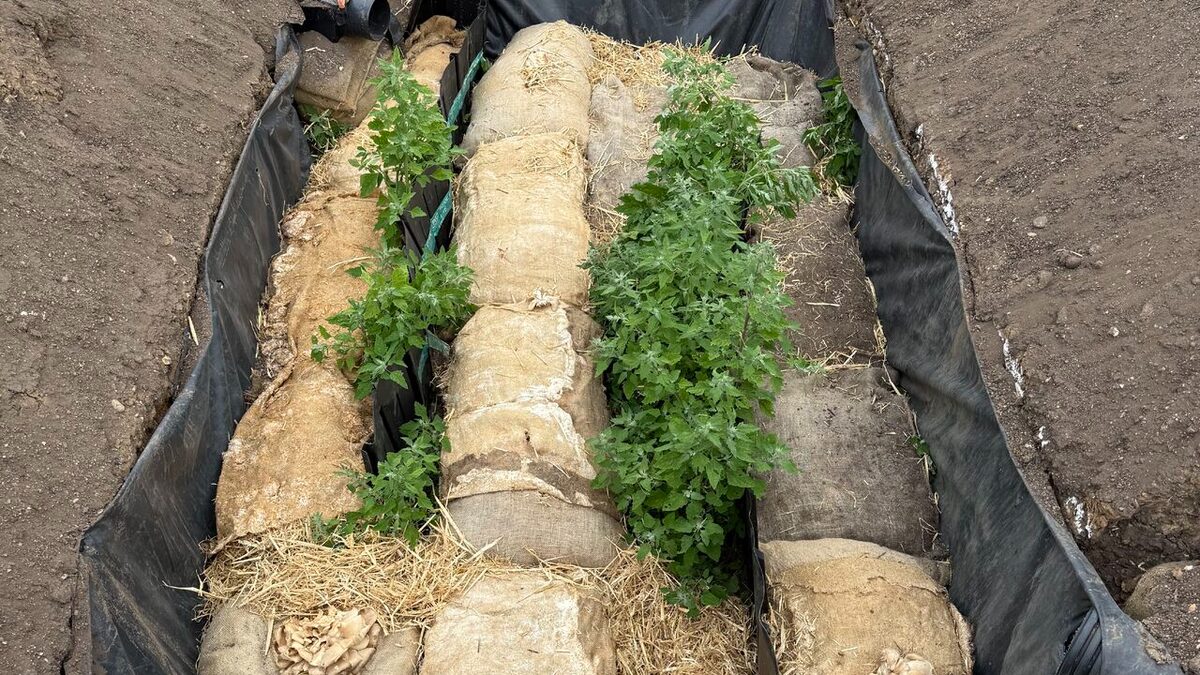
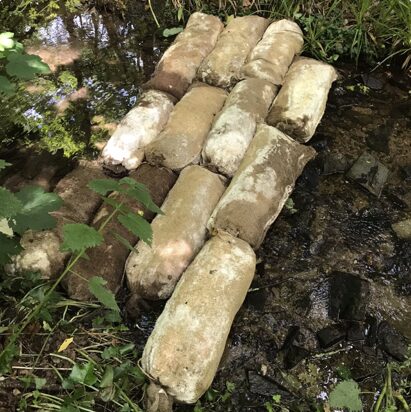
We have already installed mycelium sacks at three locations:
- Witcham, using Turkey Tail and a control
- Witchford, using Oyster mushroom
- Dry Doddington, using Wine Cap
Early laboratory analysis has indicated reductions of up to 58% for phosphorus, 35% for nitrate and 72% for iron.
In Leicestershire, in partnership with Spore & Anvil, one recent field result recorded phosphorus concentrations of 11.3 milligrams per litre upstream and 1.95 milligrams per litre downstream of the Wine Cap filter – a reduction of 82.7%.
These are early results and should be treated as such. The purpose of the study is not to present a finished product, but to understand where mycofiltration can add value, where it needs support from other treatment processes and where it may not be appropriate.
The water sector is on the cusp of its biggest transformation in 30 years. To ensure the next chapter leads to brighter outcomes for the environment and the wider public, we need to solve multiple urgent challenges. Bold, innovative solutions that take a long-term approach to the health of our precious water system and the impact of the water industry on environments and communities are what we should be striving for. What’s clear is that this line-up of winners is not short on innovation – a powerful tool for change.
Jo Jolly, Director, Innovation, Ofwat
From idea to implementation
A promising laboratory result, in controlled conditions, is only the beginning. For a water company to adopt mycofiltration, we need to understand how long filters remain effective, whether there is an initial bedding-in period and when performance begins to decline.
We also need to understand how filters should be maintained, replaced and monitored, what happens during winter storm events and how spent materials should be managed safely. It may, for example, be worth investigating the viability of circular economy, and creating a potential sustainable fertiliser as a by-product from the work.
The filter format currently being explored is deliberately straightforward: natural or biodegradable materials such as cotton or hessian, filled with sawdust and inoculated with mycelium. The mycelium is allowed to grow through the substrate before deployment, creating a potentially flexible treatment unit.
The eventual solution may not be a sack. Engineers and suppliers may develop a more sophisticated arrangement that retains the same biological principle while improving flow control, installation, monitoring or replacement.
That distinction is important. Innovation is not always about inventing something completely new. Sometimes it is about taking a simple idea and designing it properly for the environment in which it needs to work.
In an ideal future, if a water company has a particular consent to meet, we should be able to determine how much mycelium is required, what configuration is needed and how consistently it can achieve the target.
That means moving beyond the question of whether mycofiltration works in principle and towards a much more practical one:
Why collaboration matters
This project would not have progressed through one organisation working in isolation. Pooling vast and diverse resource to explore new approaches brings together water-company expertise, engineering and design capability, academic research, specialist suppliers and practical knowledge from people working directly in the field.[JM3] Such a broad ecosystem of skills and experience also allows us to potentially expand the contaminant scope to emerging pollutants like PFAS as well as heavy metals.
Scientists can investigate how fungal species interact with different contaminants. Water companies can identify operational needs and suitable sites. Engineers can consider how to integrate mycofiltration into wetlands, treatment works and catchments. Suppliers can develop materials that are robust, scalable and safe to deploy.
Most importantly, collaborative exploration helps connect innovation to implementation. It is one thing to demonstrate that mycelium can remove a pollutant in a controlled experiment. It is another to design a system that can be installed, monitored, maintained, replaced and regulated within a working water environment – that journey requires many different kinds of expertise and many open minds.
Designing mycelium into future solutions
If the current programme produces strong evidence, the next step will be to consider how mycofiltration can become part of water-industry design.
A future project might involve a wetland where mycelium is included as an initial filtration stage; a targeted installation at a sludge-drying bed; a rain garden beside a road; or an intervention within an agricultural catchment or upstream of a sensitive receiving environment.
The design questions may eventually become very specific:
- How much mycelium is needed?
- Where should it be placed?
- How often should it be replaced?
- What other processes should work alongside it?
- How should its performance be monitored?
- What should happen to the material at the end of its useful life?
- That is when an emerging idea becomes a practical engineering option.
Mycofiltration is not a silver bullet, and it is not yet proven for every application. But it offers a valuable opportunity to rethink how we protect water quality.
It reminds us that innovation can come from biology as well as technology, and that Nature-based Solutions can be integrated into – not separated from – engineered infrastructure.
Mycofiltration will not be the answer to every water-quality challenge. But by looking more closely at how natural systems already filter, transform and retain contaminants, we may find new ways to make water treatment more adaptable, effective and nature-positive.
Solving the water industry’s biggest challenges will require more than maintaining the status quo. It will require us to keep looking in unexpected places – and to work together when we find something worth exploring – as mycelium is proving to be.