Nature-based Solutions (NbS) for the Water Sector
Let’s not talk about green or grey, but green and grey. The sweet spot for overcoming water sector challenges lies in traditional infrastructure working in harmony with the environment to drive the same or even better outcomes: Water and nature, water and climate resilience, water and carbon reduction, water and people.
Bryn Jones, Nature-based Solutions Lead at Sweco UK
Our core NbS expertise
- Improving water quality and nutrient performance – constructed wetlands, integrated catchment management, source-control measures, river restoration and nature-based treatment.
- Managing flood risk and improve catchment resilience – natural flood management, floodplain restoration, wetland creation, SuDS and blue-green infrastructure.
- Addressing drought, water scarcity and water neutrality – water efficiency, reuse, recharge, catchment interventions and water-neutral development strategies.
- Restoring rivers and improve ecological condition – river recovery, geomorphology, natural bank protection, fish passage, habitat creation and river condition assessment.
- Delivering biodiversity and carbon outcomes – biodiversity net gain, habitat creation, woodland and peatland restoration, carbon baselining and monitoring.
- Creating more resilient and better-performing assets – nature-based interventions integrated with treatment works, reservoirs, drainage networks, highways and development infrastructure.
Why Sweco?
- Deep water-sector understanding – experience of utility assets, catchments, regulators, planning and delivery constraints.
- Systems thinking – interventions are assessed from source to receiving waterbody, rather than as isolated features.
- Integrated technical capability – hydrology, hydraulics, water quality, ecology, geomorphology, landscape, carbon, planning and economics in one team.
- Design-to-delivery support – from opportunity assessment and optioneering through design, consenting, construction support, monitoring and asset management.
- Evidence-led decisions – benefits, risks, costs, dependencies and performance are made clear for investment decisions.
- Green and grey integration – NbS is applied where it provides the best outcome, alongside conventional infrastructure where necessary.

Our nature-based solutions specialisms
Nature-based solutions can be applied at different scales – from individual sites and assets to entire catchments. Sweco identifies and integrates the approaches best suited to each client’s environmental, operational and commercial objectives, often combining multiple interventions with conventional ‘grey’ infrastructure.
Natural flood management
By working with natural processes, natural flood management can slow, store and filter water across the catchment. Measures such as leaky barriers, woodland creation, wetland restoration and floodplain reconnection can reduce downstream flood risk while delivering wider benefits for water quality, biodiversity and landscape resilience.
River restoration
River restoration helps reinstate the natural processes that support healthy, resilient watercourses. Our work can include reconnecting rivers with their floodplains, improving channel form, restoring habitats, removing barriers and using natural materials to manage erosion—improving ecological condition while supporting flood management and climate adaptation.
Constructed wetlands
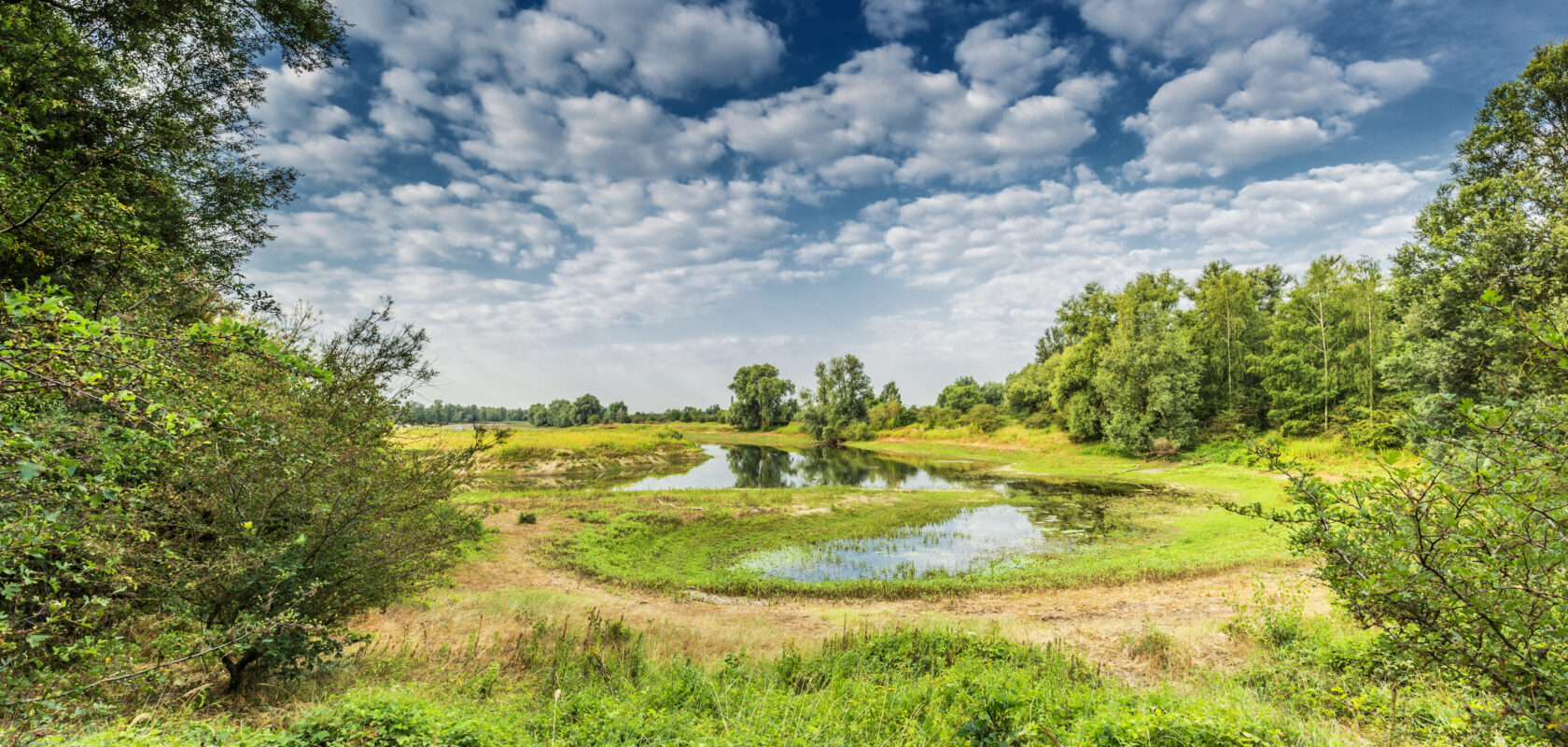
Constructed wetlands use natural processes to improve water quality and manage nutrients, sediments and pollutants. They can provide a resilient, low-energy treatment option for wastewater, surface water and agricultural runoff, while also creating valuable habitat and contributing to biodiversity and landscape objectives.
SuDS and blue-green infrastructure
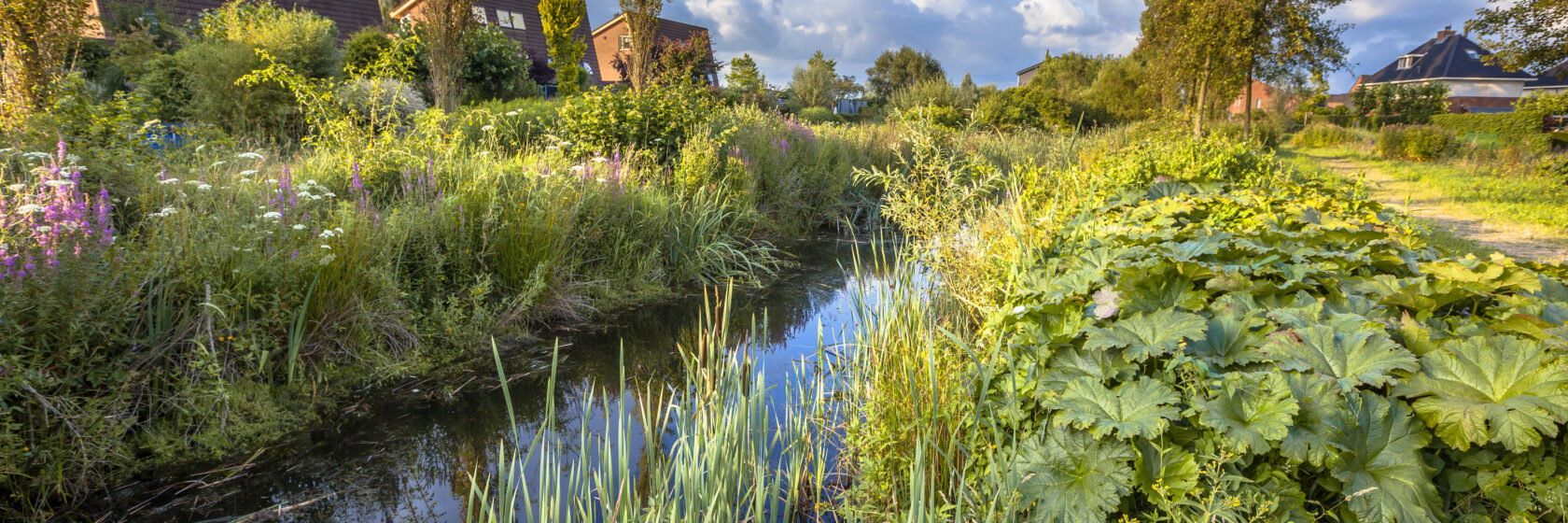
Sustainable drainage systems and blue-green infrastructure manage rainfall close to where it falls, reducing runoff, flood risk and pressure on drainage networks. Features such as swales, rain gardens, ponds, wetlands and permeable surfaces can also create attractive, biodiverse spaces for people and wildlife.
Wetland, peatland and woodland restoration
Restoring wetlands, peatlands and woodlands can strengthen natural water regulation, improve water quality, capture carbon and enhance biodiversity. These interventions can support more resilient catchments by increasing water storage, reducing erosion and helping landscapes adapt to changing weather patterns.
Water neutrality and reuse
Nature-based approaches can form part of wider strategies to reduce water demand and improve long-term water security. Combined with efficiency measures, rainwater harvesting, greywater reuse and catchment interventions, they can help support water-neutral development and reduce pressure on existing water resources.
Benefits of Nature-based Solutions
When discussing Nature-based Solutions, it’s important to remember that there are multiple environments, multiple challenges and multiple solutions to consider. But while there is no ‘one-size-fits-all’ approach, the NbS ‘palette’ of skills we can draw from as end-to-end water consultants offers common universal benefits that span the 17 United Nations Sustainable Development Goals:
- Climate change mitigation
- Disaster/extreme weather event mitigation
- Social equity and community engagement
- Sustainable economic development & job creation
- Improved wellbeing (nature-based tourism, recreation)
- Biodiversity protection & enhancement
9 Nature-based solutions that could transform the water sector landscape
In the water industry, Nature-based Solutions offer a transformative approach to addressing multiple challenges across utilities management. By placing our engineering emphasis on restoring and protecting wetlands, rivers, and coastal areas, as well as implementing green infrastructure solutions, we can use NBS to achieve nature-positive water filtration, flood prevention and improved water quality to address water scarcity and pollution in particular.
Natural systems thinking – whereby restoring and enhancing ecosystems can help us tackle the challenges facing society – has the power to change the game across water industry. Here, our experts explore some of the foremost weapons in our NbS armoury when it comes to driving sustainability and resilience, boosting natural capital in particular across the water infrastructure and its assets.
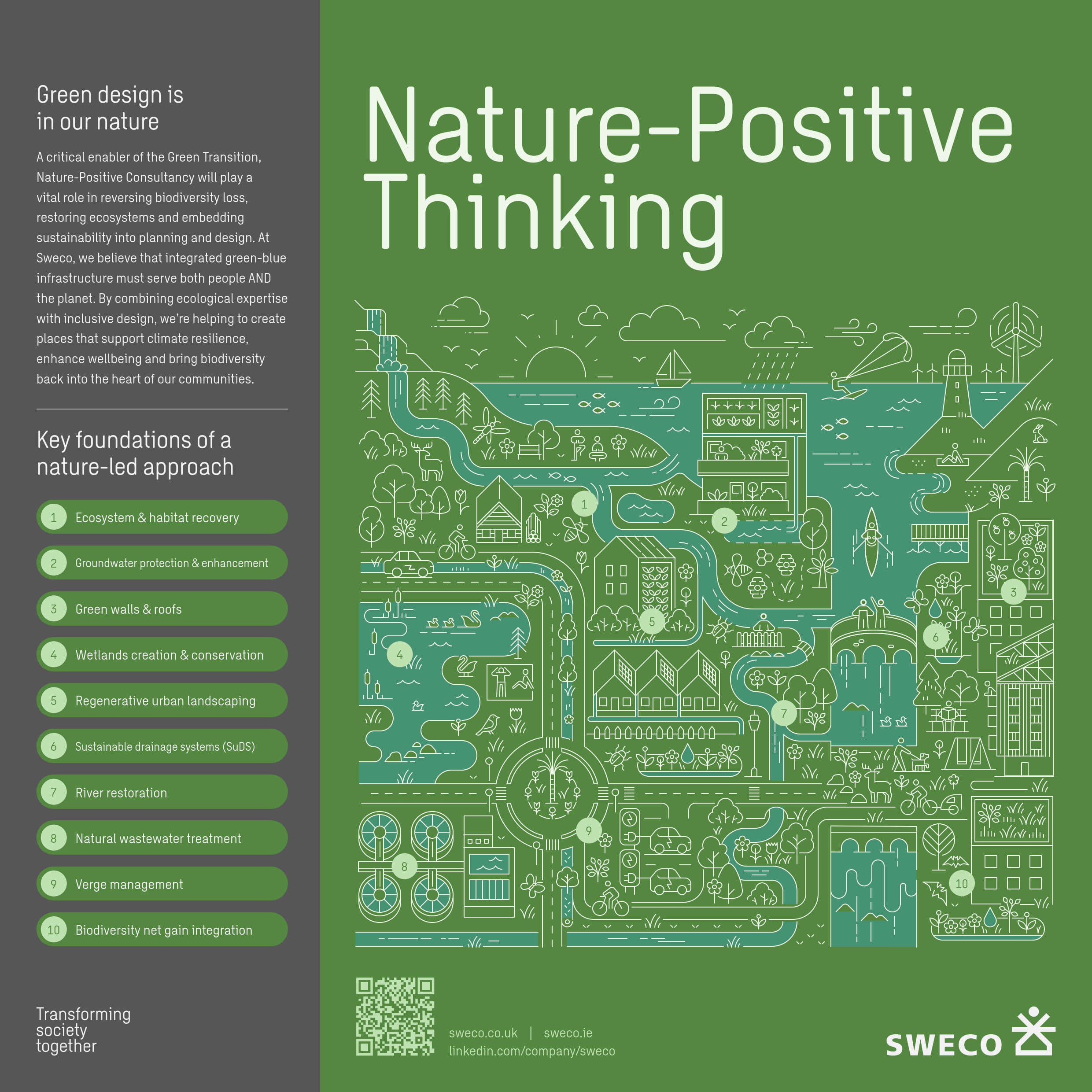
1. Champion sustainable drainage systems (SuDS)
SuDS are an actionable way to tick multiple sustainability boxes, and are more than a means to solve drainage issues or improve flood risk management alone.
Within the concept of ‘Sponge Cities’ and the development of blue-green infrastructure in urban areas, SuDS in simple terms collect water and filter it slowly, lowering and delaying flow rates, into the ground, rivers or the sewerage system. While doing so they can improve water quality, promote biodiversity, reduce urban heat island effect, and increase the resilience of the built environment, to name just some of the typical associated benefits.
A wide range of SuDS exist, for example attenuation basins, swales, permeable pavements, soakaways, rain gardens, filter strips, and green roofs; appropriate SuDS solutions need to reflect the local context and built environment, manage constraints and maximise opportunities.
2. Focus on nutrient neutrality
Nutrient neutrality is growing in importance as a nature-based solution, with a growing number of organisations exploring opportunities to control nutrients for example via integrated catchment management and nature-based solutions for water storage or treatment. The most progressive water companies are, for example, starting to introduce constructed wetlands on their sewage treatment works.
3. Collaborate on carbon sequestration
Carbon sequestration – which captures and stores atmospheric carbon dioxide – can be used to offset residual emissions to achieve the sector’s net zero targets and is possible across water works and infrastructure sites through the creation or restoration of woodland or peatland. In tandem, good soil management can even lead to the ability to use or sell carbon credits as a means of offsetting carbon for landowners.

4. Prioritise river restoration and remediation
Unsuitable engineering solutions can negatively impact on flood risk and the morphological processes of a river. This in turn and unsurprisingly, might harm habitats and biodiversity, water quality and the riparian and aquatic environment.
Giving space back to water e.g. unculverting, re-meandering, protecting and enhancing floodplain storage capacity and wetlands etc – is essential if we are to meaningfully integrate climate adaptation and biodiversity enhancement within infrastructure and development planning – both in terms of engineering and management. Applying river restoration techniques and integrate natural banks protection where feasible should also be uppermost in design.
5. Enhance natural flood management
Identifying and enhancing natural processes at catchment level to control flood waters and ‘slow the flow’ is the most sustainable solution to manage the effects of urbanisation and development, and provides a wide range of benefits beyond simple flood risk management.
For long-term resilience we should aim for sustainable land management with permeability at its core, protecting and enhancing the space for water also through sustainable development planning (e.g. Sequential Test). Achieving this goal requires an integrated approach, informed by a wide range of specialists and stakeholders, in line with the various points discussed in these pages.
6. Amplify biodiversity net gain (BNG)
BNG is becoming a critical as part of any meaningful EIA, with a view to promoting river, amongst other, habitats – and there is a requirement for all developments to achieve +10% net gain in biodiversity compared to their pre-development baseline. It is therefore critical to enlist the support of hydrologists, geomorphologists and ecologists to carry out River Condition Assessments, and more critically, to inform the design of river habitat improvements.
7. Promote water neutrality
The idea of water neutrality is to ensure developments and operations do not increase pressure on water resources. Last year – ultimately recognising the importance of their water footprint, Natural England put a moratorium to new developments in the Sussex North Water Resource Zone, with a challenge to prove that it would not cause increased pressure on water resources. This has stopped several local plans and raised concern about potential solutions amongst developers – a situation likely to be mirrored elsewhere as the importance of water resilience becomes more of a key issue.
Water neutrality requires water efficiency, reuse (rainwater harvesting and greywater recycling) and offsetting and at Sweco we see a great opportunity for an holistic approach which promotes water quality protection (e.g. wetlands, groundwater recharge) and re-use, where feasible, integrating surface water flood risk management and storage (e.g. basin full when needed for consumption, empty when needed for flood storage).
8. Enhance land management
How land is managed will have a major impact on water design, and with the right monitoring, reporting and verification of solutions also offers an opportunity for biodiversity net gain credits.
Improved land management practices might include choosing sustainable methods of farming versus industrial approaches (for example agroecology or agroforestry) using cover crops to increase soil carbon content and promoting soil health by lessening the amount of chemical fertilisers applied.
9. Consider coastal and marine design
Using natural solutions for flood and coastal management specifically can support localised economic growth through safeguarding fishing, tourism and raw materials industries. Natural flood protection, wave dampening and storm water runoff reduction can also mitigate the risk of erosion, pollution and natural habitat loss which in turn protects biodiversity as well as infrastructure.