How more connected design is shaping a more connected Aberdeen
As Aberdeen’s South Harbour continues to grow, improving access for freight, businesses and local communities is becoming increasingly important. Sweco is delivering the detailed design for the Aberdeen South Harbour Link Road, a key infrastructure project within the Aberdeen City Region Deal investment programme.
Driving growth through integrated infrastructure
Aberdeen’s South Harbour has recently been renovated and is seeing increased activity from shipping vessels and energy companies developing renewable projects, including solar and wind power generation.
To support this growth, Aberdeen City Council is improving the roads around the harbour, with Sweco appointed to deliver the detailed design for the Aberdeen South Harbour Link Road, a new connection between the South Harbour, the industrial estate and the wider road network.
The Aberdeen South Harbour Link Road forms part of the Aberdeen City Region Deal (ACRD), a partnership between the Scottish Government, the UK Government, Opportunity North East, Aberdeen City Council and Aberdeenshire Council. Through investment in strategic infrastructure, innovation and skills, the Deal aims to support long-term economic growth across the region. The project is being delivered through the Aberdeen City Region Deal investment programme.
By bringing together roads, structures, transport planning, active travel, environmental and landscaping expertise, this exciting project demonstrates how a more connected design can help shape a more connected Aberdeen.”
Morgan Wardlaw, Principal Engineer
The challenge
Supporting Aberdeen’s growing South Harbour required more than simply improving access for freight. The route needed to accommodate heavy goods vehicles and abnormal loads while also creating a safer and more attractive environment for people walking, wheeling and cycling.
Existing junction layouts and tight geometric constraints presented challenges for larger vehicles, which can result in inefficient routing through surrounding residential areas. The project therefore required a solution that would improve connectivity for freight while enhancing accessibility and safety for all road users.
By bringing together the needs of industry, communities and active travel, the design team faced the challenge of creating infrastructure that works for everyone.
The solution
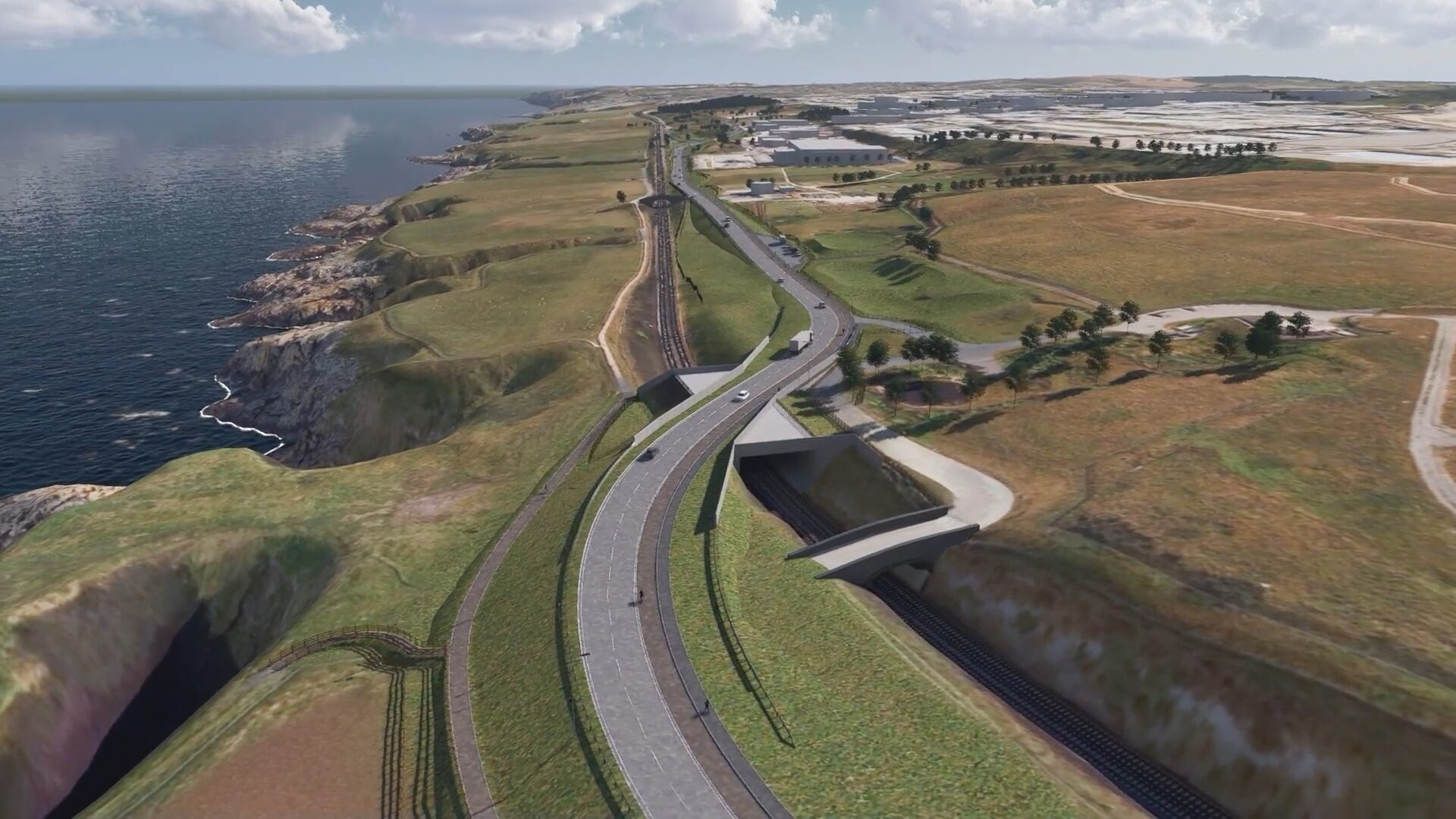
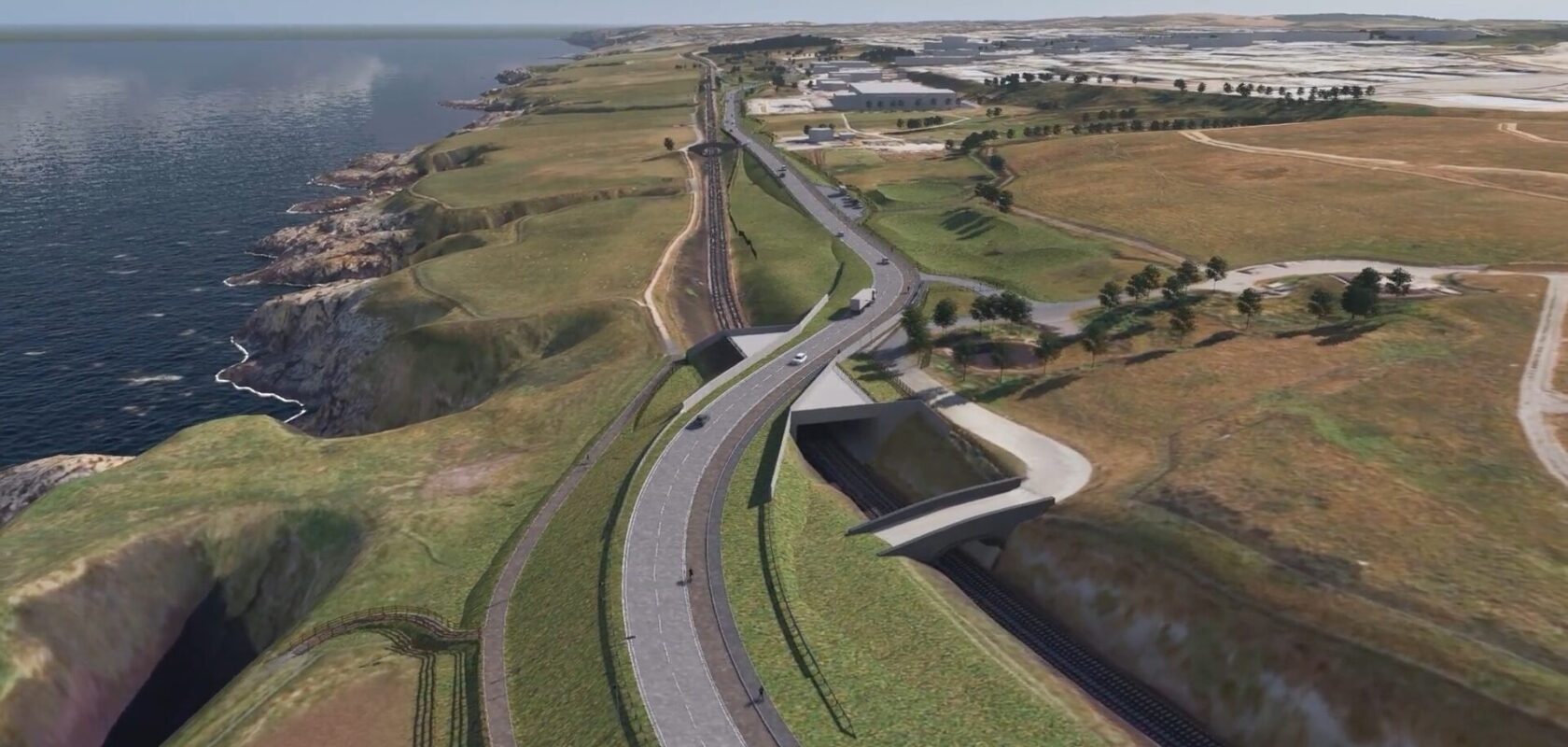
Sweco developed a design that improves connectivity between Aberdeen’s South Harbour, the industrial estate and the wider transport network, while creating a route that better serves all users.
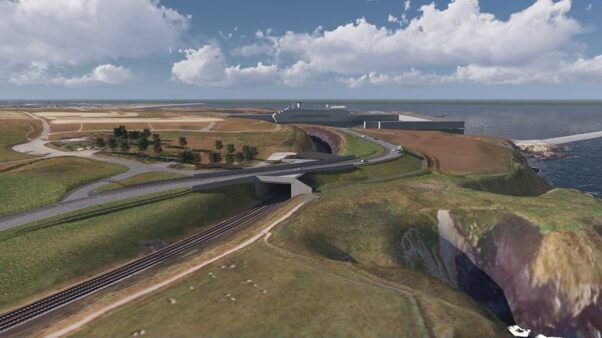
By refining the road alignment at key junctions and the bridge crossing, the design improves access for heavy goods vehicles and abnormal loads. This will help reduce the need for larger vehicles to use surrounding residential streets, supporting more efficient freight movement between the harbour and the wider road network.

Alongside improving freight access, the project introduces enhanced facilities for people walking and cycling, helping create stronger connections across the area and supporting a wider range of travel choices.
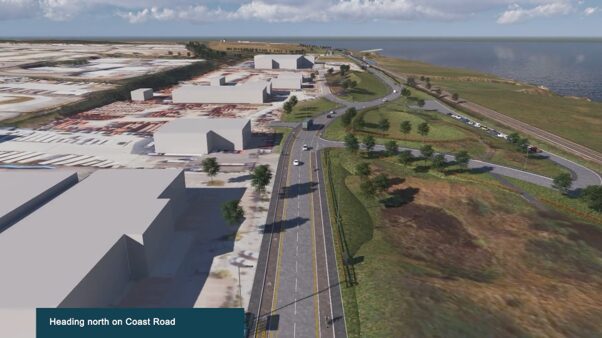
At two roundabouts on Hareness Road, the design team took inspiration from Dutch- roundabout principles to create a protected layout that balances the needs of different users. Key features include:
- Greater vehicle deflection to encourage lower traffic speeds
- Overrun areas to accommodate larger vehicles
- Dedicated cycle tracks around the roundabouts
- Pedestrian refuge islands to support safer crossings
Together, these elements create a more inclusive transport corridor that supports the movement of goods, encourages active travel and improves the overall user experience for the communities and businesses that rely on the route.
Connecting expertise
The Aberdeen South Harbour Link Road demonstrates the value of bringing together a broad range of specialist expertise to deliver a complex infrastructure project.
Since the project commenced in July 2022, the design has progressed through DMRB Stages 2 and 3 before moving into detailed design in April 2024. Throughout this process, Sweco has assembled an integrated team spanning five offices across three countries, led by the Edinburgh highways team.
The project draws on expertise from across the business, including highways, structures, environment, transport planning, geotechnics, pavement design, street lighting and landscape architecture. Working as a single multidisciplinary team has enabled the project to be considered holistically, ensuring that transport infrastructure, active travel, environmental constraints, landscape integration and constructability are addressed together rather than in isolation.
This collaborative approach has been particularly important where disciplines intersect. For example, the proposed bridge solution was developed by Sweco’s UK structures team in close consultation with Network Rail, while independent checking was undertaken by Sweco’s structures specialists in Poland, providing assurance that the design remains safe, compliant and fit for purpose.
By connecting expertise across disciplines, locations and project stages, the team has been able to develop a coordinated design that supports the operational needs of the harbour while responding to the requirements of local communities, stakeholders and the surrounding environment.
Connecting digital innovations
Digital technology has helped connect teams, disciplines and stakeholders throughout the project.
Using tools such as clash detection and 3D modelling, the project team was able to coordinate designs more effectively and identify potential issues early. ArcGIS supported public consultation activities, while Twinmotion visualisations helped communicate proposals to stakeholders and the wider community.
By combining digital design and engagement tools, the team has been able to improve collaboration, support decision-making and communicate the project more effectively throughout its development.
Connecting the community
The project has provided opportunities to engage with local communities and support the next generation of engineers.
Sweco delivered STEM activities for local school pupils, promoting active travel and sustainable transport, while a series of public consultation events enabled residents, businesses and stakeholders to help inform the development of the scheme.
The team also supported university students through work placements, with one participant subsequently joining Sweco as a graduate engineer.
By connecting with schools, communities and future professionals, the project has helped create value beyond the infrastructure itself, leaving a positive legacy for the region.
Connecting sustainability with practicality
Sustainability has been a key consideration throughout the project, with the design balancing environmental outcomes alongside the practical requirements of a major transport scheme.
As part of the project, Sweco supported the development and application of the ORIS materials intelligence tool, helping to identify opportunities to source materials more efficiently and reduce transport-related carbon emissions.
The scheme also incorporates measures to enhance the local environment and support community use of the area, including improved walking routes, sustainable drainage, biodiversity enhancements and landscape improvements.
By integrating sustainability considerations throughout the design process, the project aims to deliver long-term environmental benefits while maintaining a practical and efficient transport connection for the harbour and surrounding communities.
#ConnectedConsultancy
The Aberdeen South Harbour Link Road demonstrates the value of a connected approach to infrastructure design. By bringing together expertise from across highways, structures, transport planning, environment, landscape and active travel, the project has developed a solution that responds to the needs of both the harbour and the wider community.
Digital tools have supported collaboration, stakeholder engagement and informed decision-making throughout the design process, helping to ensure a coordinated and efficient outcome. At the same time, sustainability considerations have been embedded within the scheme, balancing environmental improvements with the practical requirements of a strategic transport connection.
As part of the Aberdeen City Region Deal investment programme, the project will support improved connectivity to Aberdeen South Harbour while contributing to wider regional ambitions for economic growth, sustainable development and investment in infrastructure.
By combining technical excellence with collaboration, innovation and community engagement, the project highlights how connected design can help shape a more connected Aberdeen.
If you are planning a complex transport, highways or active travel project, Sweco can bring together the specialist expertise needed to develop practical, connected and sustainable solutions.