SWECO BUILDING STANDARDS GUIDANCE NOTE
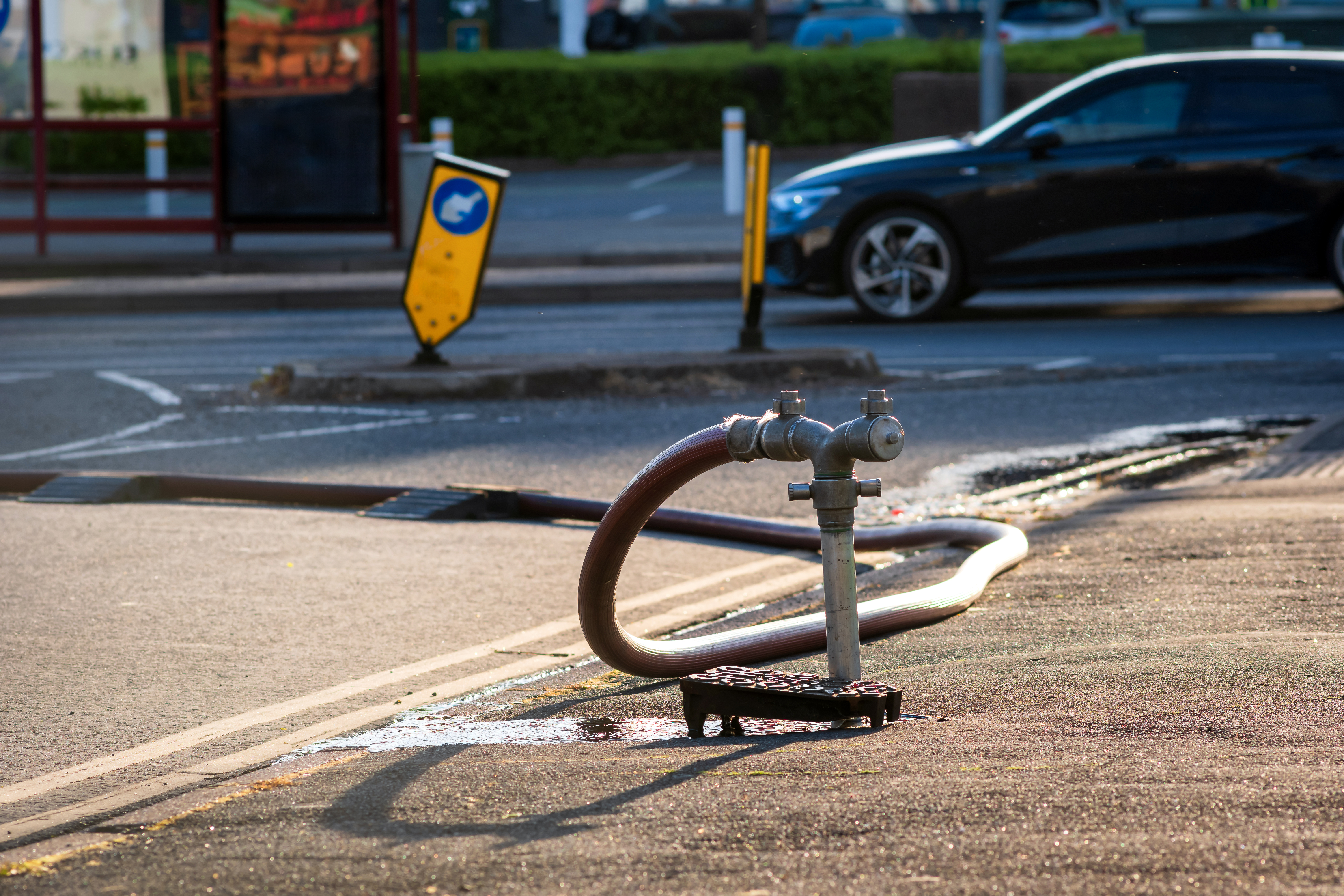
Fire Hydrant Building Regulations

Introduction
This guidance note outlines Sweco’s view on an appropriate approach when considering the adequacy of water supply to Firefighting Hydrants.
Both Volumes of ADB Guidance suggest:
An alternative source of water should be supplied where any of the following apply.
- No piped water supply is available.
- Pressure and flow in the water main are insufficient.
- An alternative source of supply is proposed.
But gives no guidance on sufficiency.
This guidance note is designed to bring about consistency in the way Sweco Registered Building Inspectors approach this issue.
Guidance
On new buildings, commercial extensions (creating or causing compartment sizes to exceed 280m²) and material change of use, the RBI should seek confirmation regarding the location of hydrants as part of the plan check. It should be established that the guidance in the relevant Approved Document B on the proximity of hydrants has been met. The Duty Holders should also be advised to check that the relevant hydrant provides adequate supply.
On works falling under the Regulatory Reform (Fire Safety) Order 2005, the statutory consultation must not be carried out until an adequate hydrant location has been provided. However, undertaking the consultation is not dependent on information regarding the pressure and flow achieved. If the Duty Holders have established the pressure and flow, on the Hydrant(s) they intend to rely on, this information should be included in the consultation.
It is likely that the Fire Authority will have local knowledge and be aware of areas that have insufficient capacity. In these cases, it is probable that, their response to the statutory consultation will include a comment that an adequate alternative supply should be provided. In this instance, the issue should be added to the Sweco Building Regulation Tracker and only closed when details of a suitable alternative have been submitted, scrutinized and accepted.
The Duty Holders should also be advised that the provisions made for firefighting must form part of the Regulation 38 information. Best practice is for Regulation 38 information to be gathered continuously throughout the whole design and construction process with the knowledge and agreement of the client.
If it emerges, on works not falling under the Regulatory Reform (Fire Safety) Order 2005, that the supply is inadequate, the Duty Holders should be advised to seek advice from the FA directly before proposing an alternative supply. Once again, the issue should be added to the Sweco Building Regulation Tracker and only closed when details of a suitable alternative have been submitted, scrutinized and accepted.
Background Information
The National Guidance Document on the Provision of Water for Firefighting acknowledges that where there is likely to be insufficient mains pressure the developer should liaise with the FA to determine a suitable alternative.
“In some locations the existing distribution system will not allow the delivery of such flows. In these cases, developers and should engage with the local FRS to come to an agreement that meets the need for firefighting including the use of fire suppression systems etc.”
It is on this basis that the above policy looks for the Duty Holders to reach agreement with the local FA and provide evidence of the agreement as part of their Building Regulation submission.
Guidance on what running pressure is needed can be found in BS 9990.
“6.1 Adequacy of basic supply
In all cases where a mains water supply is involved, the capacity of the mains is important and should be checked.
NOTE Generally a water supply capable of providing a minimum of 1 500 L/min at all times is required (see 6.3.1).”
London Fire Brigade 317 Policy – Hydrants and water supplies for firefighting, states:
“ 3.1 The supply of water in the water undertaker’s network is governed by the Water Industry Act and any requirements placed upon them by industry regulator Ofwat. LFB does not have authority to influence this requirement through normal engagement channels and crews should therefore appreciate the statutory obligations in place before reporting low water pressure concerns.”
3.2 A water undertaker is required by law ‘to supply water at a pressure which will reach the top most storey of a residential property including within a block of flats but not at a height greater than it will flow by gravitation through its water mains from a service reservoir’. Ofwat’s Guaranteed Standards Scheme requires that the water company must maintain a minimum pressure in the communication pipe of seven metres static head (0.7 bar). The Water Industry Act does not 317 Issue date: 25 January 2001 6 of 20 specify flow and pressure rates for fire hydrants. The National guidance document on the provision of water for firefighting, which does outline suggested flow rates to cover various types of development, is a guidance document, not legislation. The Fire and Rescue Service therefore cannot insist the local water undertaker delivers the flow rates described in this document.”
In Appendix 1 this document goes on to state:
“Ofwat’s Guaranteed Standards Scheme requires that the water company must maintain a minimum pressure in the communication pipe of seven metres static head (0.7 bar). The reality is companies usually deliver a minimum of 1.5 bar.”
References
Approved Document B volume 1 and 2
National Guidance Document on the Provision of Water for Firefighting
The contents of this Guidance Note are confidential to Sweco and the intended recipient and are subject to copyright in favour of Sweco. The content of this Guidance Note must not be reproduced by any person (including the intended recipient) without the prior written consent of Sweco.
The Guidance Note does not constitute professional advice and Sweco hereby offers no reliance and accepts no liability (in contract, tort (including negligence) or otherwise) for parties acting on the content of this Guidance Note without taking specific professional advice from Sweco. The Guidance Note is provided as generic guidance only and any opinion, views or advice expressed in this Guidance Note are made without any representations or provide any assurances or warranties as to the content. If you require specific advice with respect to your own project or circumstances, please contact Neil Badley.