
Water Resilience
The need to address water challenges has never been more critical. Water scarcity, flooding, pollution, climate change and growing pressures on water systems rank among the top global risks that communities will face over the next decade. Ensuring access to clean water, securing resilient infrastructure and supporting healthy communities are therefore critical priorities.
What is water resilience?
Water resilience is the ability of water systems, places and communities to anticipate, withstand, recover from and adapt to water-related pressures and disruption. These pressures include:
- Flooding and extreme rainfall
- Drought and water scarcity
- Pollution and declining water quality
- Climate change and changing rainfall patterns
- Ageing or failing water infrastructure
- Rising demand and competing uses of water
In practice, water resilience means ensuring that people, businesses, ecosystems and essential services continue to have access to safe water and remain protected from water-related hazards.
It requires action across the whole water cycle – from source protection and water supply to wastewater, stormwater, land use and the natural environment.
Rising water resilience challenges
Climate extremes
Climate change is increasing the likelihood of more intense rainfall, flooding, heatwaves and longer dry periods. The same urban conditions – hard surfaces, drainage systems and reduced infiltration – can contribute both to flood risk and water scarcity.
Water scarcity and rising demand
Population growth, urbanisation, changing consumption rates and climate change are increasing pressure on available supplies. In Europe, water stress already affects a significant proportion of the territory and population, while drought is becoming a recurring rather than an exceptional risk. (See our report: Healthy water cities.)
Pollution and emerging contaminants
Water bodies and groundwater are under pressure from diffuse pollution, agricultural chemicals, industrial substances, pharmaceuticals and PFAS. These contaminants are difficult and expensive to remove, increasing the need for prevention, monitoring and advanced treatment. (See our report: Taking on Europe’s water challenges)
Ageing infrastructure and investment gaps
Many water supply, wastewater and drainage networks are ageing, poorly documented or under-maintained. The cost of repairing and replacing existing assets is significant, but at the same time, investment is needed for expansion, climate adaptation, improved treatment and greater system capacity.
The challenge is compounded when water tariffs and investment decisions do not reflect the full long-term cost of resilient services, including maintenance, adaptation, pollution treatment and environmental protection.
Increasing system complexity
Water systems are interdependent with energy, transport, communications, health and other services. Failure in one system can cause cascading disruption elsewhere. Water companies and public authorities therefore need better asset information, risk assessment, contingency planning and cooperation.
Fragmented responsibility
Water resilience crosses boundaries between water companies, local authorities, planners, developers, landowners, infrastructure operators and communities. Clear responsibilities are needed for planning, funding, maintenance and emergency response.
The need to work with nature
Traditional drainage and flood-defence infrastructure alone will not address every future risk. The industry increasingly needs to combine conventional engineering with nature-based and blue-green solutions that retain water, improve water quality, support biodiversity and provide wider social benefits.
How water resilience affects other sectors
Transportation
Flooding can damage roads, railways, bridges, tunnels, ports and airports, and can prevent people, goods and information from moving. It can also damage the water infrastructure located beneath or alongside transport corridors.
Water-resilient transport planning should therefore:
- Assess flood exposure for transport assets and routes
- Consider the vulnerability of individual assets, not just flood depth
- Protect drainage systems, culverts and bridge structures
- Design roads and rail corridors to manage or safely convey stormwater
- Provide alternative routes and continuity plans for disruption
- Integrate sustainable drainage into streets, verges, stations and parking areas
- Use blue-green infrastructure to make walking and cycling routes safer and more attractive
Sweco’s stormwater report describes blue-green infrastructure as a way to reduce flood risk while supporting mobility, biodiversity, recreation and more liveable cities. (See our report: From threat to opportunity – revaluating storm water management.)
The built environment
Buildings and developments can either increase water risk or help manage it. Impermeable surfaces increase runoff, while poorly located or designed buildings may be exposed to flooding, water shortages, overheating or polluted water.
For the built environment, water resilience means:
- Avoiding development in high-risk locations where possible
- Designing for future rainfall, drought and groundwater conditions
- Retaining and rainwater on site
- Using permeable surfaces, green roofs, rain gardens and storage areas
- Protecting basements, plant rooms and essential equipment from flooding
- Reducing demand through efficient fixtures and leak detection
- Reusing rainwater or treated wastewater where appropriate
- Making maintenance responsibilities clear for drainage and blue-green assets
The authors recommend moving beyond a narrow focus on pipes and drainage to create multifunctional places that manage water while also providing cooling, amenity, biodiversity and health benefits.
Critical infrastructure
Flooding and water-system failure can disrupt hospitals, care homes, schools, electricity networks, communications, emergency services, financial services and supply chains.
The key issue is not only whether an asset is exposed to a hazard, but also how vulnerable it is and what depends on it. A flooded electricity substation, for example, could affect water treatment, communications, transport and healthcare.
Resilience planning should therefore:
- Identify all critical facilities and services
- Include socially critical facilities such as hospitals, nurseries and elderly-care homes
- Assess asset-level vulnerability, including construction, location and design
- Map interdependencies and potential cascade effects
- Provide backup power, alternative access and operational continuity
- Plan for evacuation, emergency response and recovery
- Coordinate across authorities, utilities and infrastructure operators
Sweco’s study of European cities found that policies often focus more on technical infrastructure than on social infrastructure and rarely assess cascade effects in detail. (See our report: Floods and critical infrastructure.)
Placemaking and public space
Water resilience can improve the quality and identity of places rather than simply protecting them from damage.
Public spaces can be designed to:
- Store water temporarily during extreme rainfall
- Slow and filter runoff
- Provide shade and cooling during heatwaves
- Restore rivers, wetlands and natural drainage
- Support biodiversity and ecological connectivity
- Create attractive places for recreation and social interaction
- Make water visible and help people understand its value
- Strengthen community identity and sense of place
Examples include floodable parks, rain gardens, water squares, permeable plazas, restored river corridors, green streets and rainwater tanks incorporated into public-realm design.
Our Healthy Water Cities report argues that restoring space for water and people, reintroducing nature into cities, and reducing, reusing and purifying wastewater can support both resilience and public health. (See our report: Healthy water cities.)
Planning and development
Water resilience needs to be considered early, before land-use and investment decisions are fixed. It affects:
- Where development takes place
- The amount of land that remains permeable
- The location of critical infrastructure
- The capacity and alignment of drainage networks
- The protection of water sources and recharge areas
- The design of streets, parks and public spaces
- Long-term maintenance and funding requirements
Sweco’s recommended approach is to make water-risk assessment standard practice for spatial plans, permits, infrastructure projects and financing decisions. This should be supported by municipal water strategies covering drinking water, wastewater, stormwater and flooding.
Water Resilience Assessment Checklist
This checklist can be used to turn water resilience into practical decisions across your projects, sites and investments.
- Assess your water risks. Understand how flooding, drought, pollution, heat and infrastructure failure could affect your assets and operations.
- Plan for future conditions. Use climate projections – not only historic data – when designing buildings, infrastructure and landscapes.
- Map critical dependencies. Identify the water, energy, transport, communications and supply-chain systems your operations rely on.
- Protect water sources. Safeguard rivers, groundwater, wetlands, floodplains and recharge areas from development and pollution.
- Keep development out of high-risk areas. Avoid locating new buildings and critical infrastructure in flood-prone locations wherever possible.
- Make space for water. Design sites, streets, parks and public spaces to store, convey or absorb excess water safely.
- Use blue-green infrastructure. Consider wetlands, rain gardens, trees, green roofs, permeable surfaces, ponds and floodable spaces.
- Combine green and grey solutions. Use nature-based measures alongside pipes, tanks, barriers and treatment systems where this provides the required protection.
- Manage rainwater where it falls. Prioritise retaining, infiltrating and reusing rainwater before discharging it.
- Reduce water demand. Improve efficiency, fix leaks and avoid using drinking water for applications that could use alternative supplies.
- Reuse water safely. Assess opportunities for rainwater harvesting, treated wastewater reuse and localised water systems.
- Prevent pollution at source. Control pollutants from construction, roads, agriculture, industry and everyday operations before they reach watercourses.
- Future-proof infrastructure. Design water and drainage systems for changing rainfall, drought, groundwater levels, treatment requirements and demand.
- Plan for disruption. Prepare continuity and emergency plans for flooding, drought, contamination, power loss and infrastructure failure.
- Fund, maintain and measure resilience. Assign responsibilities, secure long-term maintenance funding, set targets and review performance regularly.
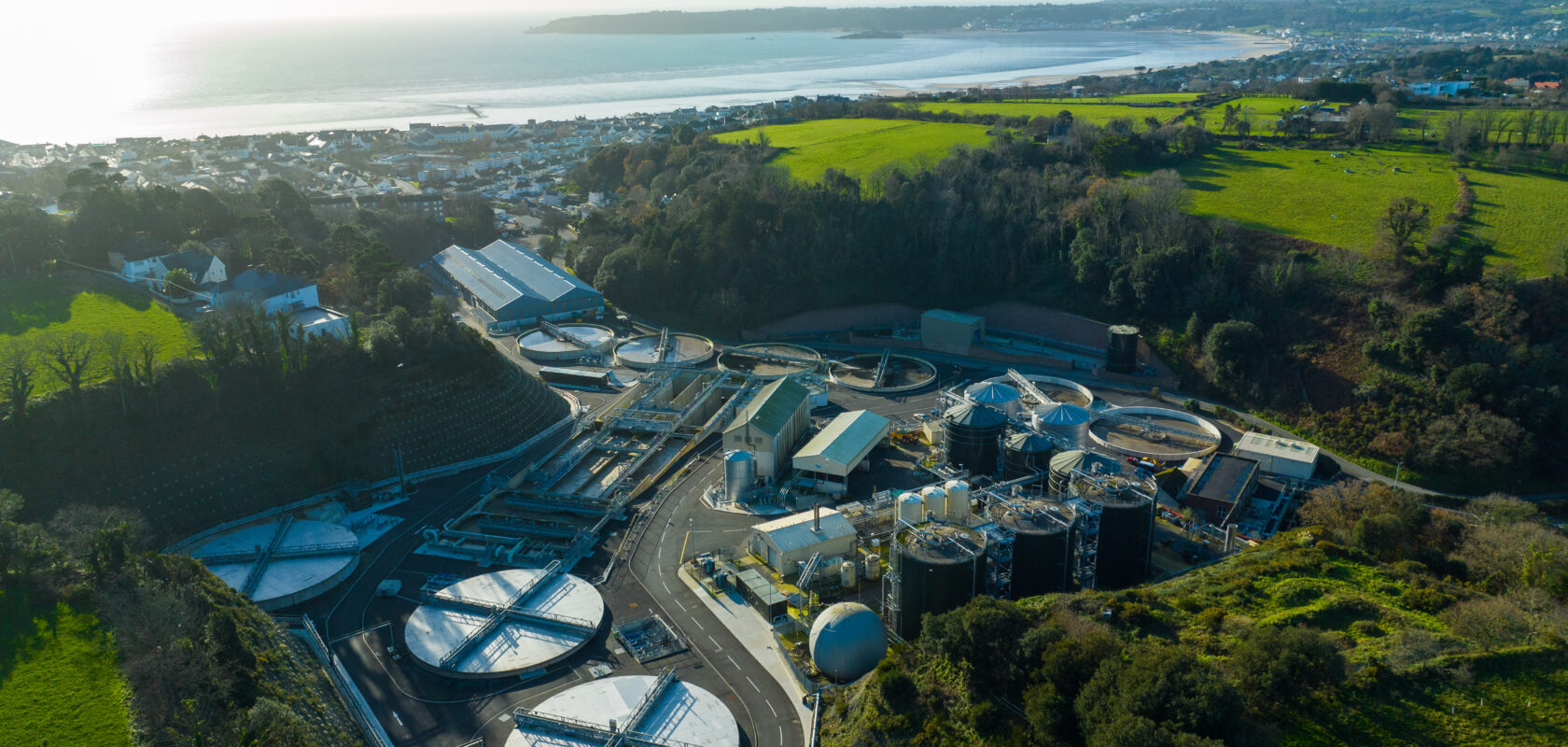
Jersey’s liquid waste strategy: a model for water resilience
Sweco is combining digital modelling, data-driven insight and long-term planning to help the Government of Jersey future-proof the island’s wastewater infrastructure.
Through more than 20 years of collaboration, our water and asset management experts have helped develop and maintain Jersey’s Liquid Waste Strategy and Long-Term Capital Programme – providing a robust foundation for investment decisions in a changing climate and uncertain planning environment.
How Sweco can help
Sweco can help you understand your organisation’s exposure to water-related risks – and turn that insight into practical action. Our specialists can assess flooding, drought, pollution, water supply, infrastructure dependencies and future climate conditions across your projects, sites and investments.
We then work with you to enhance resilience through integrated planning, design, engineering and consultancy. This may include water and drainage strategies, catchment planning, blue-green infrastructure, nature-based solutions, climate adaptation, asset management, emergency planning and water reuse.
Because water risks rarely only affect one system in isolation, Sweco brings together expertise from across our business – including water specialists, environmental consultants, building designers and engineers, transport planners, and critical infrastructure teams.
Across our team of teams, and a unique cross-discipline and cross-border skills landscape, we can help assess where you are now, identify your priorities and design a practical pathway towards greater water resilience.
Ask us about…
- Asset Management
- BIM & Information Management
- Carbon Management (PAS 2080)
- Digital Design & Zero Drawings
- Electrical Engineering
- Feasibility Studies
- Hydraulic Modelling
- Instrumentation & Control
- Lightning Protection Risk Assessment
- Mechanical Engineering
- Process Engineering and Technologies
- Structural Engineering
- Telemetry Assessments
- Visualisation for Planning and Operational Reviews
- Planning, Permits, Consent and Approvals
- Activated sludge plants
- Biosolids and biogas
- Catchment-based solutions
- DSEAR assessments
- HAZOP studies
- Infrastructure & non-infrastructure
- Model auditing & verification
- Optimisation of treatment process
- Process safety
- Rising mains
- Sewer design
- Wastewater drainage
- Water mains design
- Attenuation & infiltration basins
- Borehole design
- Climate change adaptation & resilience
- Flood risk assessment
- GIS & digital groundwater modelling
- Groundwater & soakaway drainage
- Hydrogeology & hydrology
- Natural flood management
- Rainwater harvesting
- Surface water management planning
- Surface water separation
- Urban drainage & SuDS
- Water resources planning, development & management
- Biodiversity Net Gain (BNG)
- Flood alleviation/protection scheme design
- Geomorphology
- Hydroecological impact assessments
- Masterplanning advisory
- Nature-based solutions
- Outfall design
- Placemaking/shaping
- River engineering
- Scour design, assessment, mitigation & management
- Wetlands
Grey water infrastructure
Sweco delivers class-leading engineering for traditional water and wastewater infrastructure, with deep expertise in mechanical, electrical, civil, and structural design.
From treatment works and pumping stations to advanced process technologies and control systems, we offer proven solutions underpinned by rigorous modelling, digital design, and operational insight.
Our track record spans large-scale frameworks and complex non-regulated projects – ensuring resilient, compliant, and efficient assets across the full infrastructure lifecycle.
Green water solutions
As leaders in the Green Transition, Sweco is shaping a new generation of water management through nature-based and blue-green infrastructure.
Our multi-disciplinary teams integrate hydrology, ecology, landscape design and carbon management to deliver sustainable outcomes that enhance biodiversity, mitigate climate risk and unlock long-term value.
From natural flood management to SuDS, wetlands and low-carbon upgrades, we’re redefining what water infrastructure looks like – and how it performs for people and planet.
We understand that water is not just a resource – it is the foundation of thriving communities and ecosystems. Our approach to design, engineering and operational technology integrates end-to-end grey infrastructure capability with innovative technologies and sustainable green-blue practices to transform critical networks.
Our team of teams – bringing together experts in water resources, groundwater, SuDS, flood resilience, river engineering, Nature-based Solutions and asset management – is working at the heart of the transition to a more resilient and sustainable water network. We support clients across regulated and non-regulated water sectors, both within AMP8 and for ongoing non-framework projects.
What truly sets us apart is how we work – as trusted partners, not just service providers – building long-term relationships and delivering with consistency, care and accountability.
